First in the US  |  Single Port Robotic Surgery

Robo
Boobs

Pioneering the future of preventative mastectomy

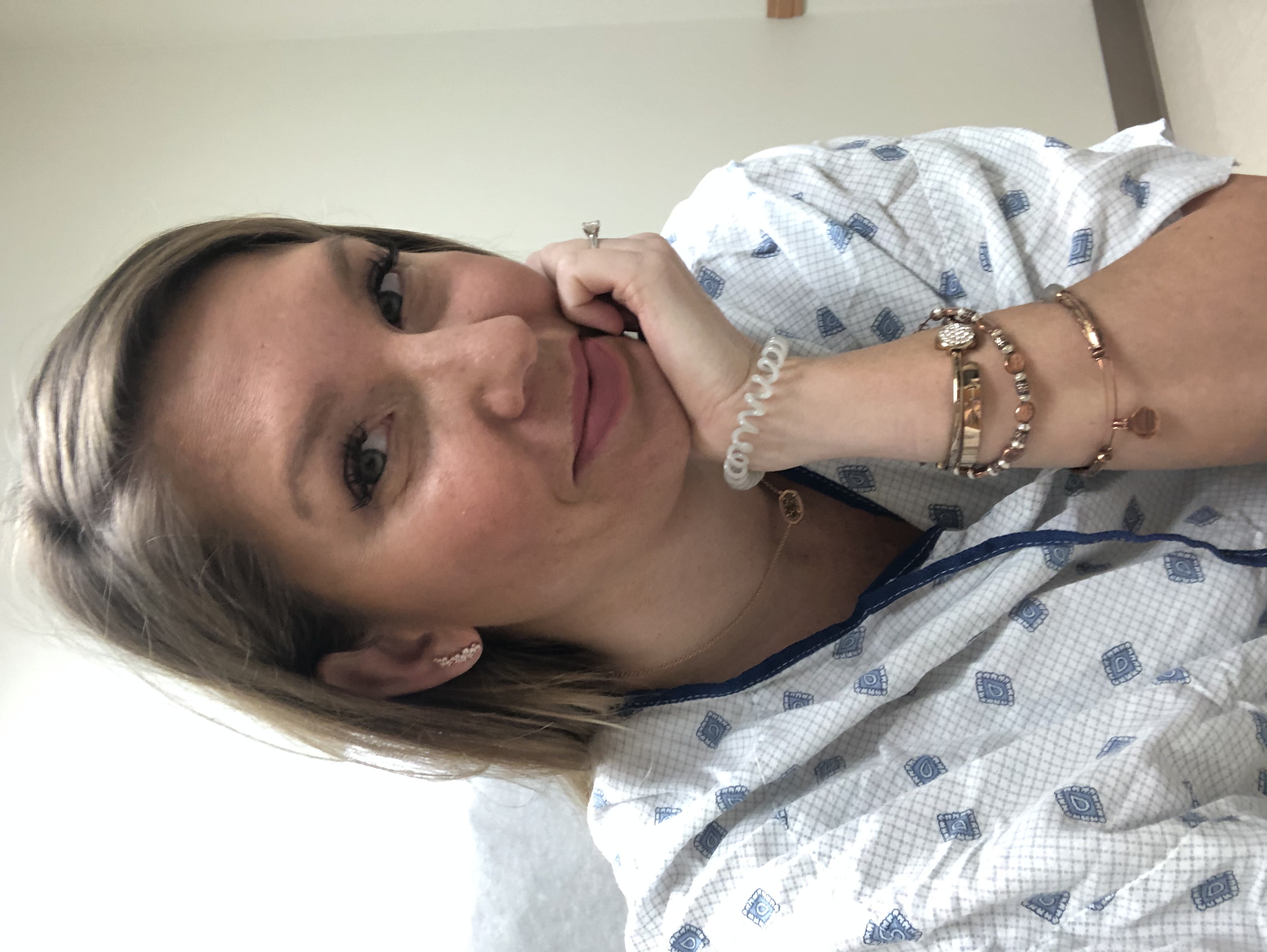
Hi, I'm Renee. I'm the first patient in the world to have a robotic mastectomy using the Single Port da Vinci Robot. I created this site to share my journey and empower others facing similar decisions about preventative surgery due to BRCA2 gene mutations.

Read My Story
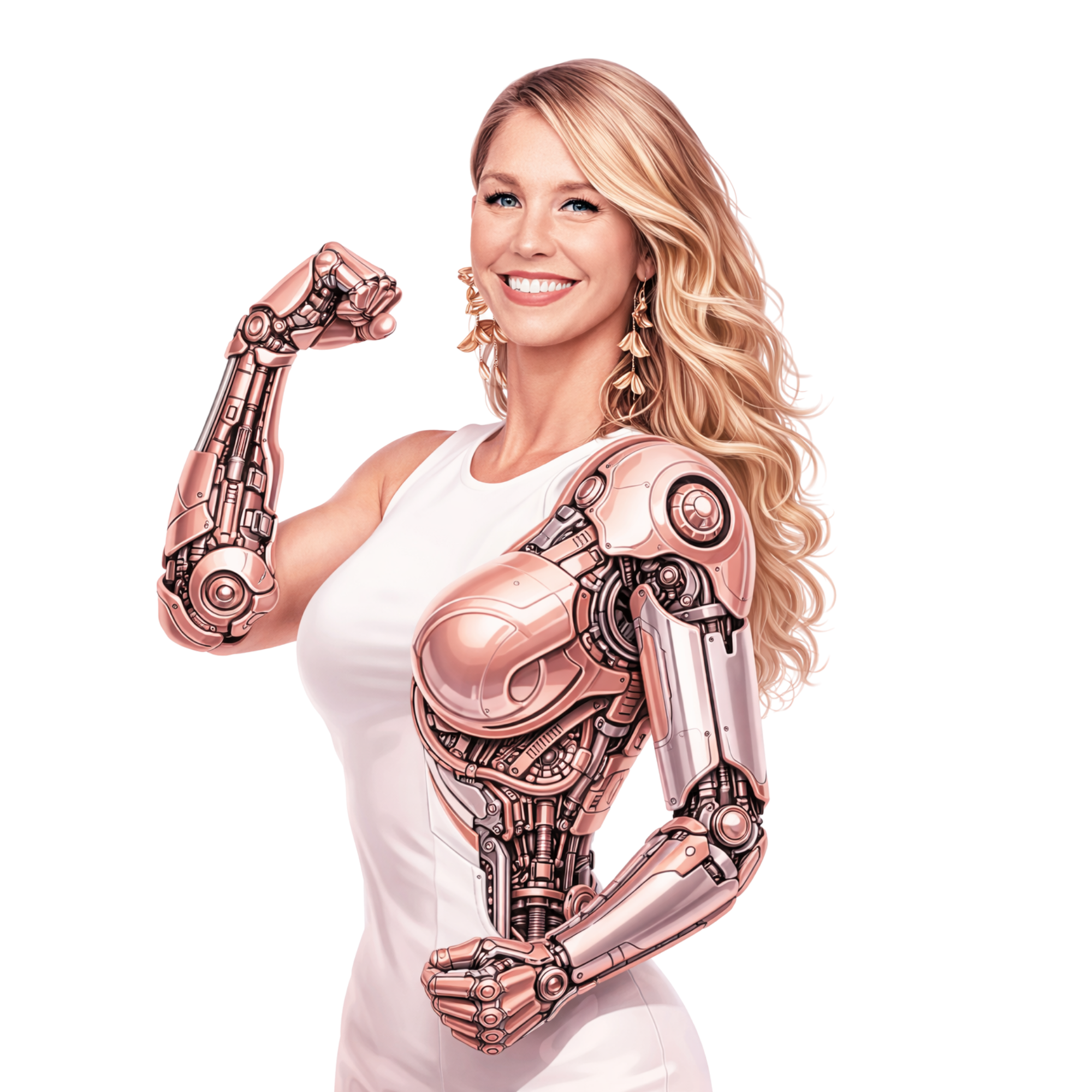
Robo Boobs illustration
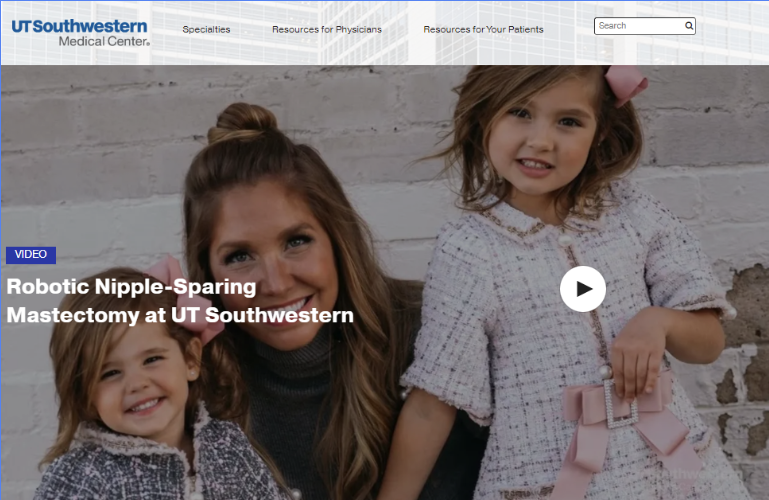
Robotic Nipple-Sparing Mastectomy at UT Southwestern
Robotic Nipple-Sparing Mastectomy UT Southwestern Medical Center — Watch on YouTube
Chapter 1

Mom Genes & The Discovery

From finding out about my BRCA2 mutation to becoming a mother — how knowledge became my greatest tool.

I discovered my BRCA2 mutation when I was 21 years old. It originated from my paternal side and this discovery was all thanks to my Aunt Cindy who was an ambassador of breast cancer research, an ally and support to many women, and a breast cancer patient herself. Through her tenacity, she discovered our family's plight well before gene mutations were as common knowledge as they are today (thank you, Angelina Jolie).

Knowledge is power and having this key piece of information for as long as I did really helped me to make an informed decision, and the right decision for me. I am now a wife and mother of 2 beautiful girls, Cora and Monroe, which helped to reinforce my decision to have a preventative double mastectomy (prophylactic) due to my extremely high risk of being diagnosed with breast cancer due to the BRCA2 gene mutation.

Road to the Decision

14 years of monitoring, research, and ultimately choosing surgery

Surgery or Not?

I had known for 14 years that I carried the BRCA2 gene mutation before choosing to undergo a prophylactic mastectomy. Living with that knowledge for so long was both a blessing and a burden.

On one hand, it was deeply unsettling to know I carried a significantly elevated risk — women with a BRCA2 mutation face up to a 69% lifetime risk of developing breast cancer. For a long time, I interpreted that statistic as a kind of inevitability. It felt like a countdown I couldn't see.

But time also brought perspective.

Knowing for so many years allowed the initial shock and fear to soften. I had space to research, to ask questions, to sit with the reality of it. That distance gave me the ability to approach the decision with more clarity and practicality, rather than urgency alone.

Of course, emotion still played a role. In fact, becoming a mother over the last four years reshaped everything. The decision was no longer just about me — it was about being present for my children. I wanted to remove as much risk as I could, to give myself the greatest chance of watching them grow up.

In a way, I felt fortunate to have known for as long as I did. Not everyone receives this information with time on their side. For many, the news comes suddenly and demands immediate action. It's far harder to feel steady and confident in your decision-making when everything feels rushed.

The Timing

I began the arduous process of monitoring my breast health at the age of 23. It was recommended to begin this 10 years prior to the youngest family member's first diagnosis; that was my aunt Cindy, who was only 33 when she got her first breast cancer diagnosis.

The monitoring eventually played a key role in thinking more seriously about prophylactic surgery. Every 6 months I alternated having an MRI and mammogram/ultrasound. It gets quite exhausting (and expensive) and especially at that age, with denser breast tissue, there are a lot of false positives. I had to chase down a few biopsies, which take an emotional and physical toll. I believe recommendations have evolved now and mammograms aren't recommended until after age 30 due to radiation exposure.

About 7 years prior to my surgery (and before kids), I did some thorough research on a prophylactic mastectomy. I went through several different breast oncologists who referred me to plastic surgeons to get an understanding of the ultimate results. I met with a lot of doctors and I must admit, what I saw then did scare me off a bit. I had to take a break. When I picked it up again, it was absolutely amazing the advancements that have been made in that 7 years; so much so, that I had the benefit of a robotic procedure!

Calendar Tip for Timing

My plastic surgeon suggested having the procedure towards the beginning of a calendar year, as that would allow me the most time to take advantage of meeting my insurance deductible. I thought that was great advice, and knowing what I know now (3 surgeries within that year) that proved to be true.

The Team

I can't stress enough the importance of selecting the right team of doctors. Being a previvor can be a bit different to navigate. You need doctors who respect the risks of hereditary cancer, but also understand what this mutation means and make you feel heard. That led me to UT Southwestern!

My original breast surgeon at UT Southwestern (Dr. Rao) was actually not who ultimately did my surgery! I had seen her for a few years and together we had come up with a plan that I would have my surgery around age 35, when I had my children and was finished breast feeding. Unfortunately, she was recruited to another hospital during this time period. That was a bit unnerving, but everything happens for a reason. She referred me to Dr. Farr. I hadn't been monitored regularly in almost 4 years due to having my two girls. So, when I returned, it was game time. I immediately clicked with Dr. Farr. I felt this sense of comfort and passion from her.

After a few visits and getting closer to my plan and the recommended time frame for my surgery (35), she introduced the robotic mastectomy option to me. I was curious and she was definitely jazzed. She told me I would be a perfect candidate. She was so excited that she offered to share the presentation she prepared to the Surgeon Board detailing her research and it was incredible. Now, I was really interested… my question of has this been done before, here in the US? Was met with "Well, no, not yet." That was certainly a little scary. But I believed in her. So, I didn't let that scare me off.

Pre-Surgery

Understanding robotic mastectomy and preparing for the unknown

A Brief History of Robotic Mastectomies

Robotic mastectomies were first developed in Italy and have been performed internationally for several years using the da Vinci multi-port robotic system. The da Vinci robot itself is not new — it has long been used in other surgical specialties — but its application in breast mastectomies is relatively recent.

In a robotic mastectomy, breast tissue is removed using robotic-assisted instruments controlled by the surgeon, rather than through traditional open surgical techniques. The goal is to allow for smaller, less visible incisions while maintaining surgical precision and improving reconstructive outcomes.

While a limited number of robotic mastectomies had been performed in the United States (multi-port), the procedure had not yet been formally authorized by the FDA. In February 2019 — just one year before my surgery — the FDA issued a safety communication stating that robotic systems had not been sufficiently evaluated for use in breast cancer-related surgeries.

That's where UT Southwestern in Dallas, Texas comes in. UT Southwestern has been at the forefront of advancing robotic breast surgery in the United States. My surgeons — Dr. Deborah Farr, breast surgeon and oncologist, and Dr. Nicholas Haddock, plastic surgeon — spent more than two years training in robotic techniques and preparing to launch a clinical trial using the newer single-port da Vinci robotic system.

Unlike the earlier multi-port system, the single-port robot uses one access point rather than multiple arms, allowing for more refined control and potentially reduced risk. Since then, their work has been published in the Journal of the American Medical Association (JAMA). You can read the published study here.

Benefits of a Robotic Mastectomy

  • Smaller incision: Typical mastectomies require a 5–9 inch incision; with a robotic mastectomy the incision is approximately 1.5 inches.
  • Faster recovery time: Due to the less invasive approach, bruising is minimal and the smaller incision heals faster.
  • Immediate reconstruction capability (direct to breast implant). This is possible with the traditional method as well, but with a robotic mastectomy the opportunity is higher.
  • Increased likelihood of sensation in the breasts.
  • More accountability: The entire procedure is filmed, giving additional insight and documentation.

Why I Chose a Robotic Mastectomy

I am very proud to say that I was the first patient (and Dr. Farr and Dr. Haddock the first surgeons) to have and conduct a robotic double mastectomy using the Surgical da Vinci Single Port Robotic System.

My prophylactic mastectomy was the launch of a clinical trial; I was patient number 1. I was aware the chances were high that I'd be their first patient, and she told me as such. Dr. Farr eased my nerves talking about their years and hours of training, numbers of cadavers and so on. I kept coming back to the images I had seen 7 years ago, and how much had advanced since then. This procedure seemed like the start to a whole new beginning on types of mastectomies. I knew I'd much rather be on the cutting edge than not. I was confident in my doctors, I trusted them and I felt that connection with Dr. Farr.

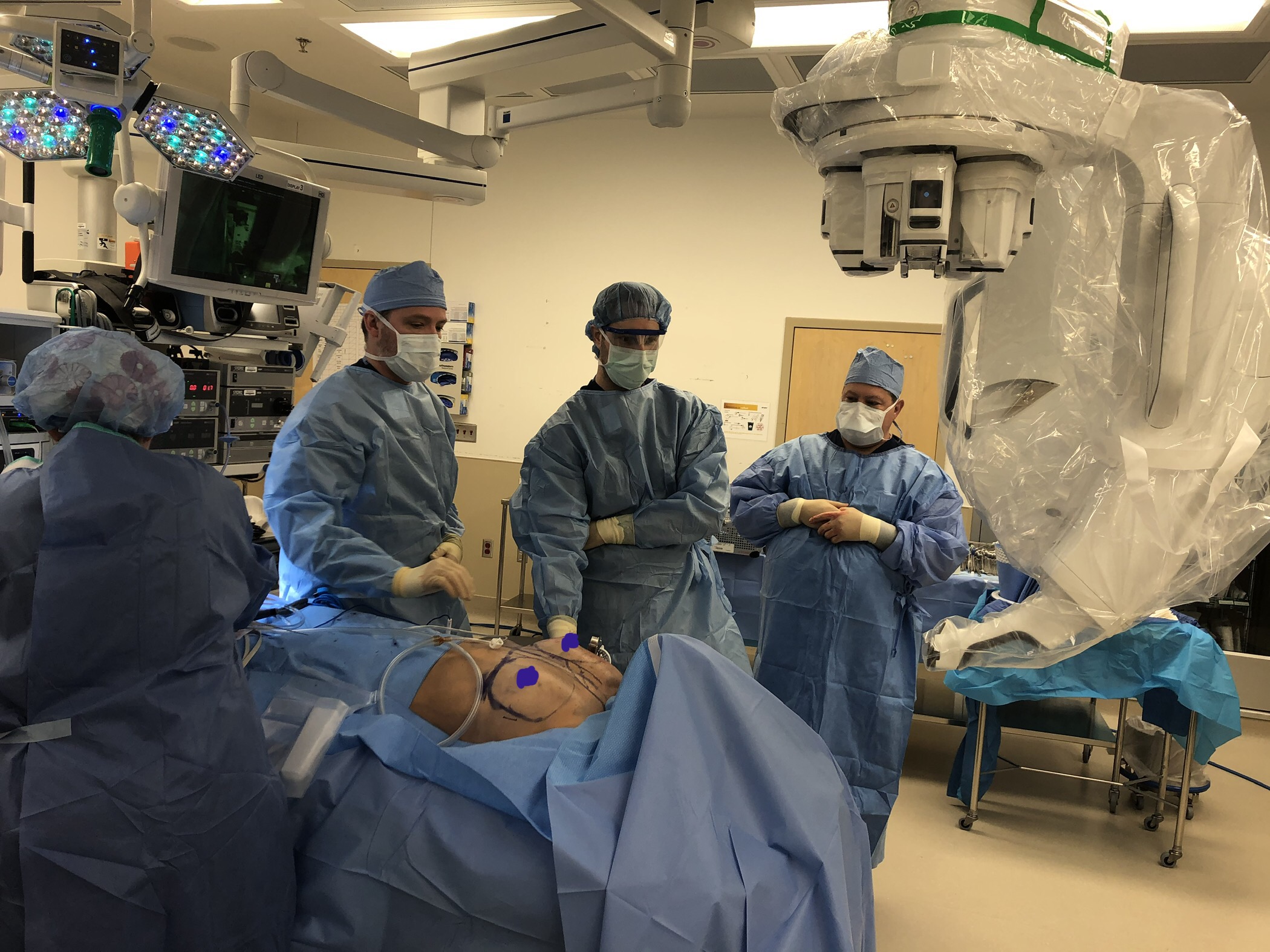
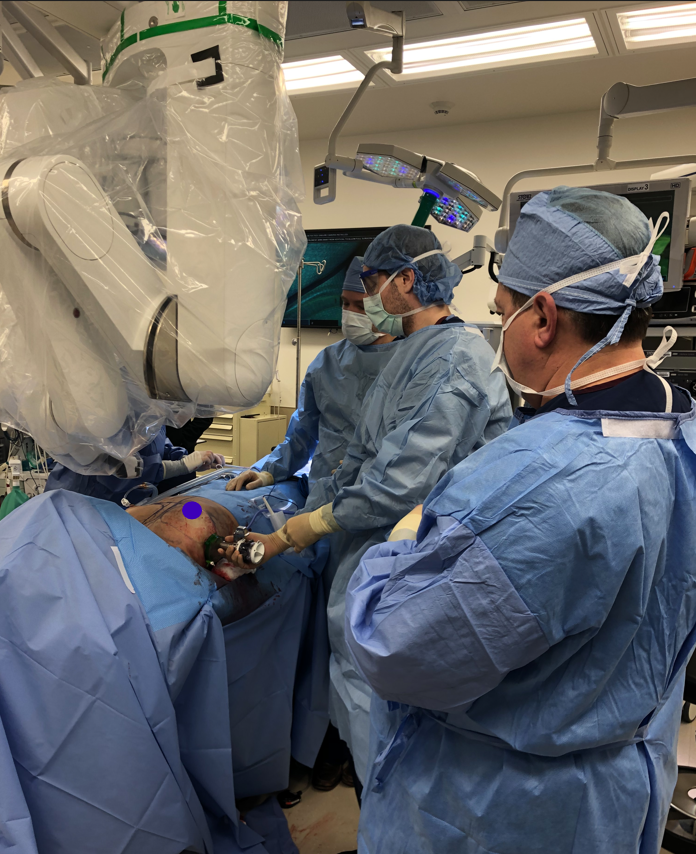
I had met with my plastic surgeon, Dr. Haddock, well before the robotic option was even introduced. He took a more pragmatic approach in explaining their training, history, and reasons why. This was a perfect balance for me. I liked how enthusiastic Dr. Farr was, but I also wanted a correct dose of reality. His surgical portion wouldn't be conducted with the robot (placing the tissue expanders), however he would serve as the in-room, on-hands guide for Dr. Farr — who would be conducting the mastectomy from a different room via the robot!

As mentioned, one of the benefits of robotic mastectomies is going direct to implant and potentially fewer surgeries. However, I was a small breast size (B) and with all this, I wanted to get larger breasts out of this! So he encouraged me to get the tissue expanders. This would allow me to customize my breast size and have more control of the aesthetics after the initial surgery. So, that's what I did.

Mental Prep

As mentioned, I had known for quite some time about my gene mutation, had come to terms that I wanted to have a mastectomy after breastfeeding both of my children and lastly, I had come around on leaping into the robotic mastectomy option. Now, it was nearly go-time.

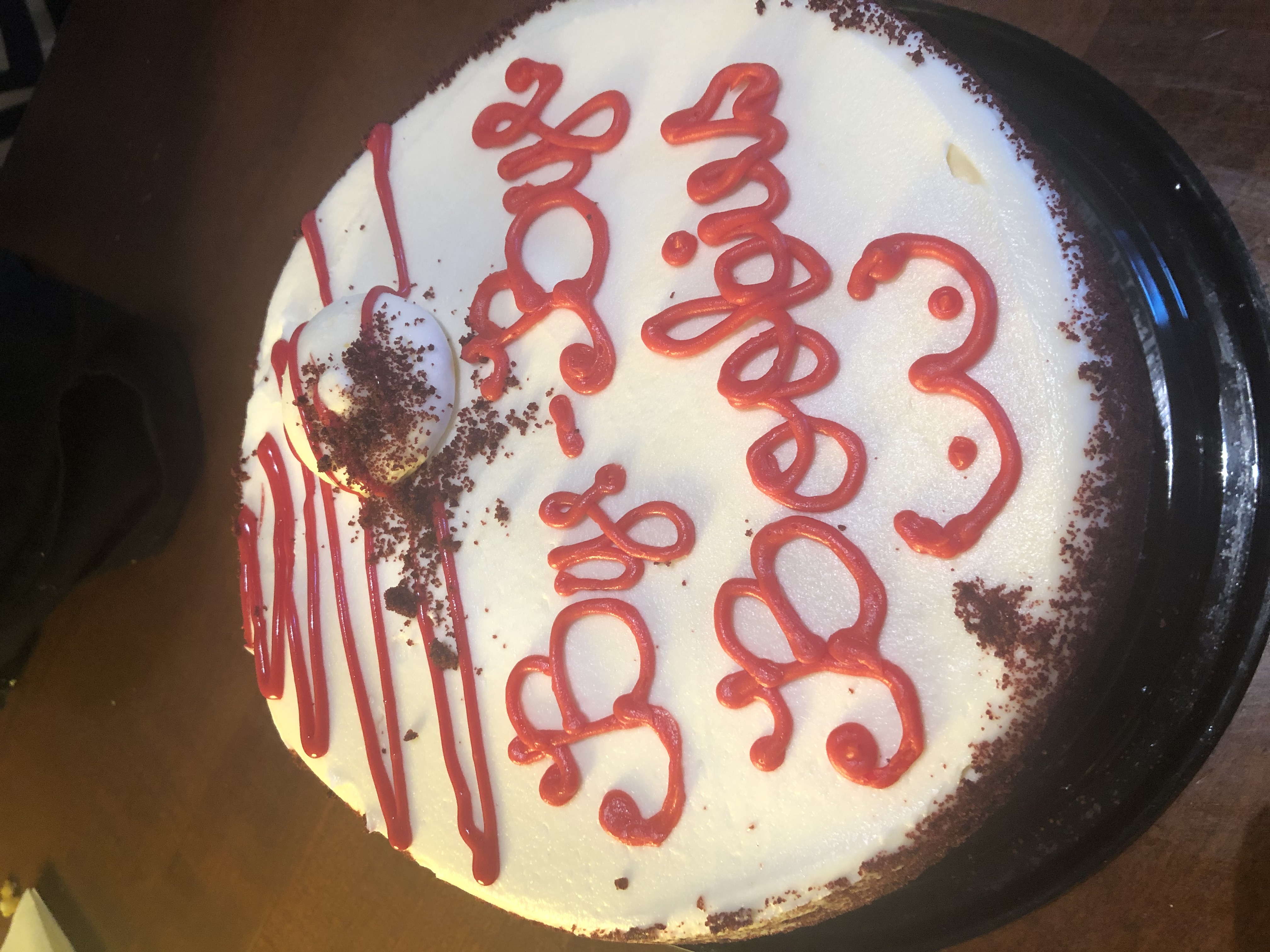
My friends were gracious and the weekend prior we went to lunch together and celebrated with a 'Bye-Bye Boobies cake' (and some flights of tequila).

I really picked up my research again and found all kinds of forums and blogs. This was helpful to put my mind at ease. But, life has a funny way of moving on and not letting you sulk for too long. I had some interesting events happen in the days leading up to my surgery.

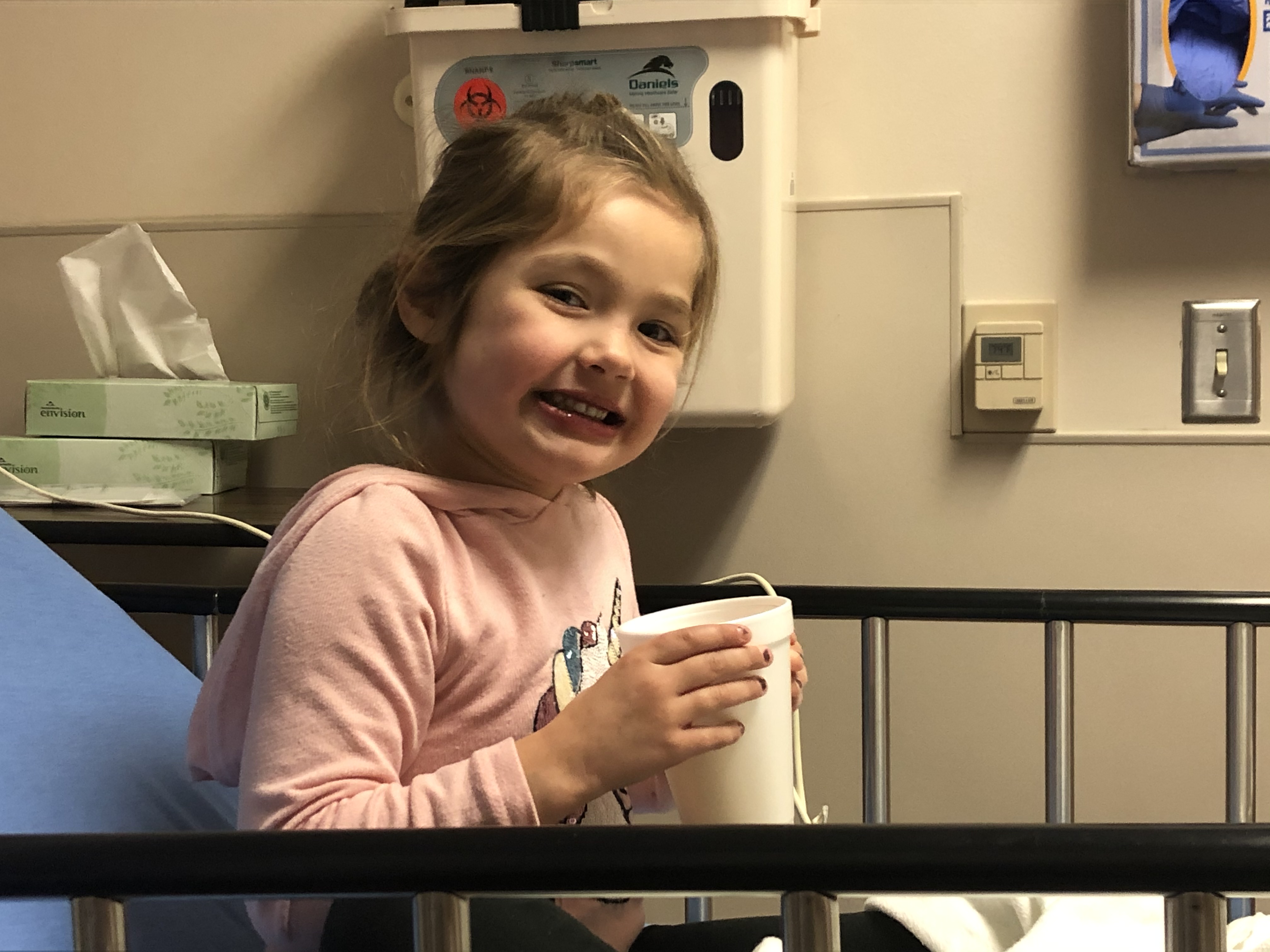
My daughter Cora, who was 4 at the time, still had an ear tube remaining in one ear. Her doctor recommended having it surgically removed — and the only day the doctor had available was the day before my surgery. I mean, really!? Thankfully, it went well. But my boobs and I certainly didn't get to relax that last day before surgery.

That night before my surgery, I was looking forward to taking a nice, hot shower. Well, guess what — the hot water tank went out that very night. No hot shower for me. It was my sign to just get on with it already. So, I took that nod and moved on.

As I packed my hospital bag that evening, I listened to a powerful song that became a good anthem for all of this — Kacey Musgraves, Rainbow:

"Everything is all right now… because the sky is finally open, the rain and wind stopped blowing. But you're stuck out in the same old storm again. Let go of your umbrella because, darling, I'm just trying to tell you… there's always been a rainbow hanging over your head. It will all be alright."
Chapter 2

The Surgery

February 1, 2020 — the day that changed everything. Walk through each moment from surgery morning to full recovery.

I had my surgery on February 1, 2020 — thankfully just before COVID-19 began impacting the U.S. in a major way.

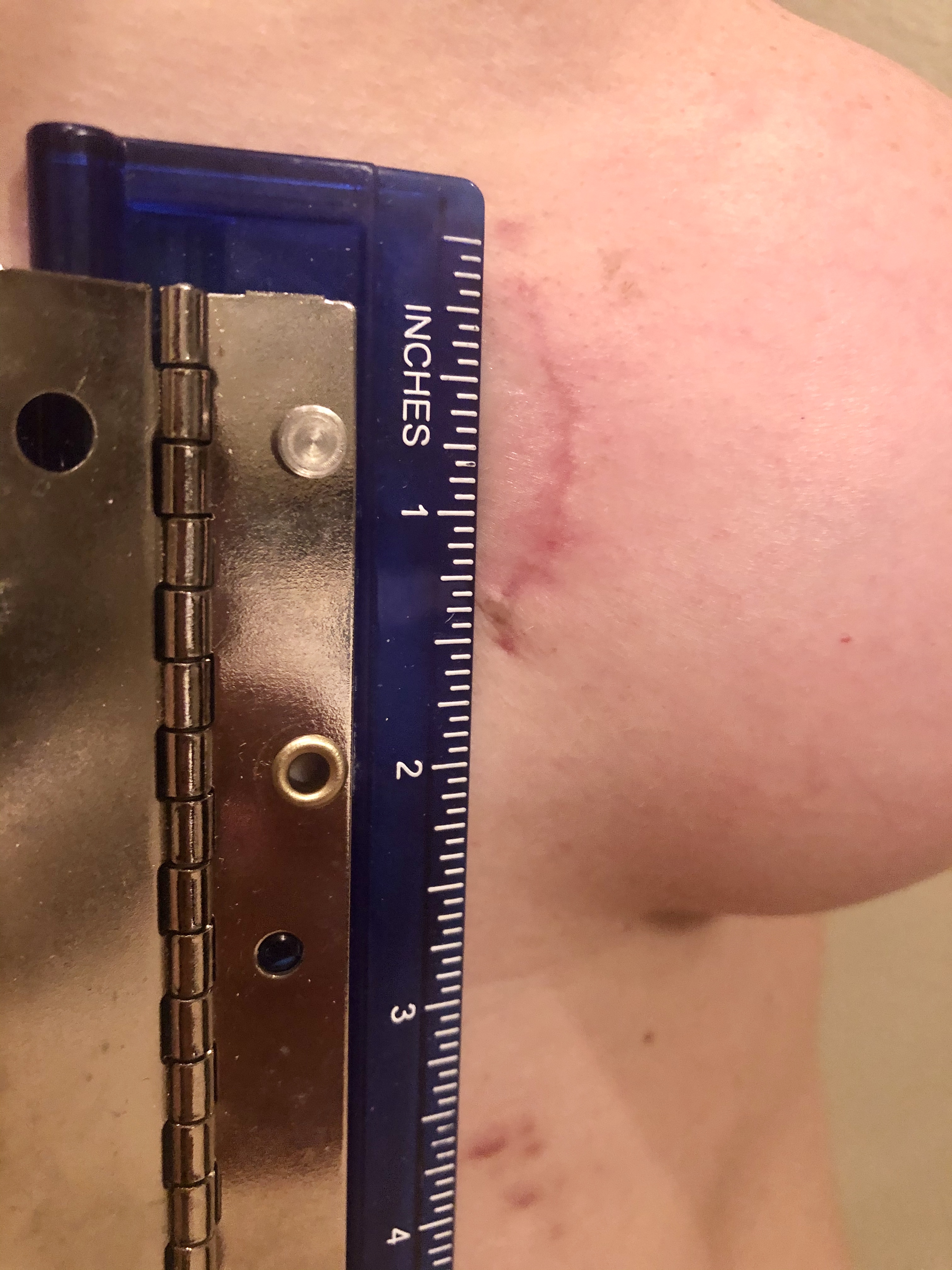
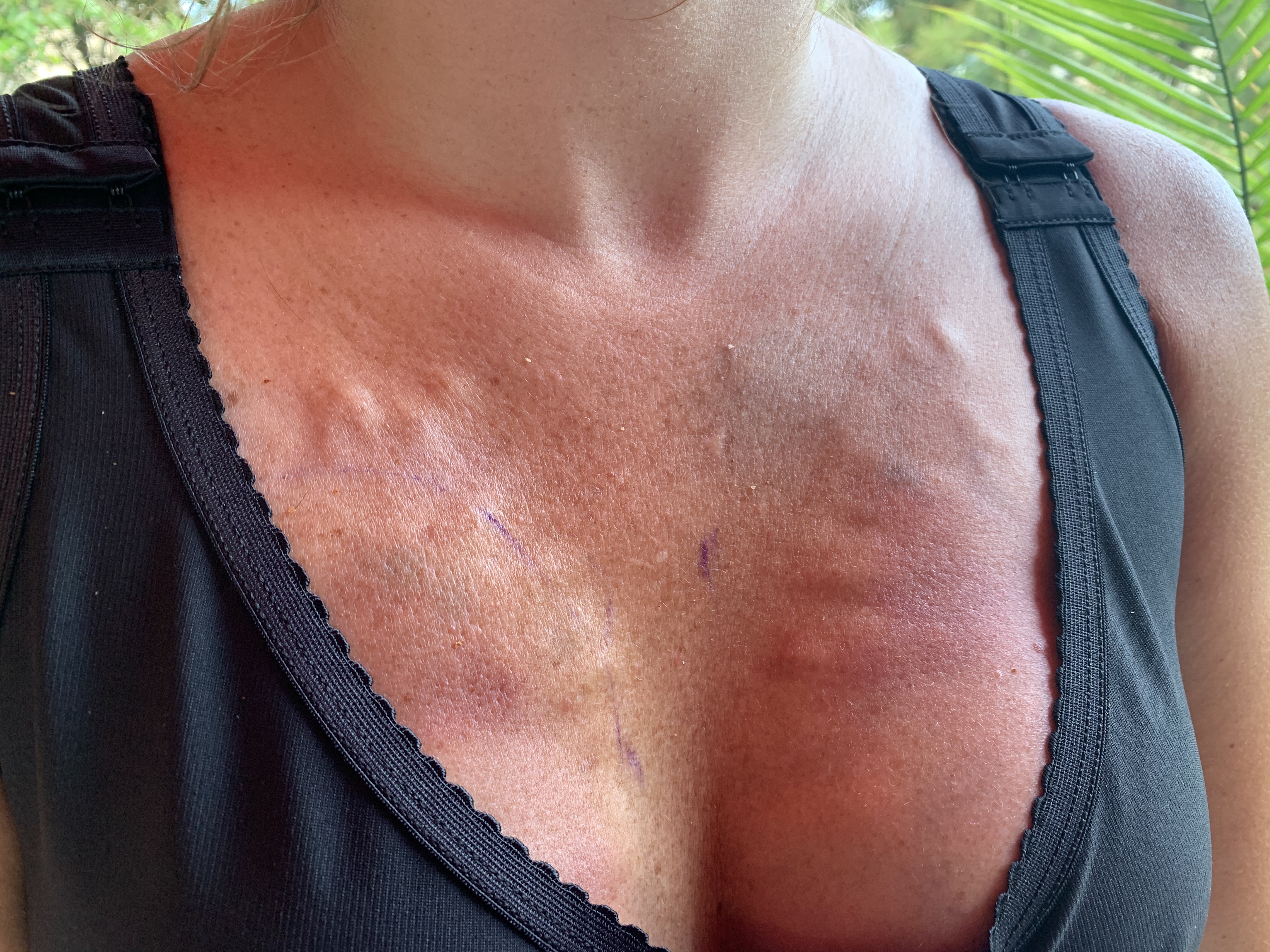
The results truly felt astounding to me. My incisions are approximately 1.5 inches vertically under each armpit. The scars are small and minimal — far less noticeable than I had imagined. I opted for tissue expanders with a goal size of a small C (approximately 420–450 cc's). The initial surgery lasted just under six hours and went smoothly. I was happy with the results that very same day — even with just expanders in place. I had minimal bruising, which honestly felt incredible.

I stayed in the hospital one night, which is still standard protocol. Overall, my recovery went very well. My drains were removed within a couple of weeks, and I completed filling the expanders to my desired size within the first month. Sensation gradually returned to my chest over the course of more than a year — though not fully, and not at 100%.

All in all, I am incredibly grateful I made this decision. The anticipation — not even the robotic component specifically, but the idea of the surgery itself — was honestly the hardest part for me. I've read so many women say the same thing. The buildup can be heavier than the reality.

That doesn't mean it was easy. There are downsides, and I'm still working through acceptance in some areas. Recovery was especially challenging with two little girls at home (ages four and two at the time). I wasn't allowed to lift them for nearly two months due to weight restrictions, and that was emotionally harder than I expected. But I was deeply supported — by my husband, by family, by friends. That support carried me physically, emotionally, and mentally through the hardest moments.

1

Surgery Morning

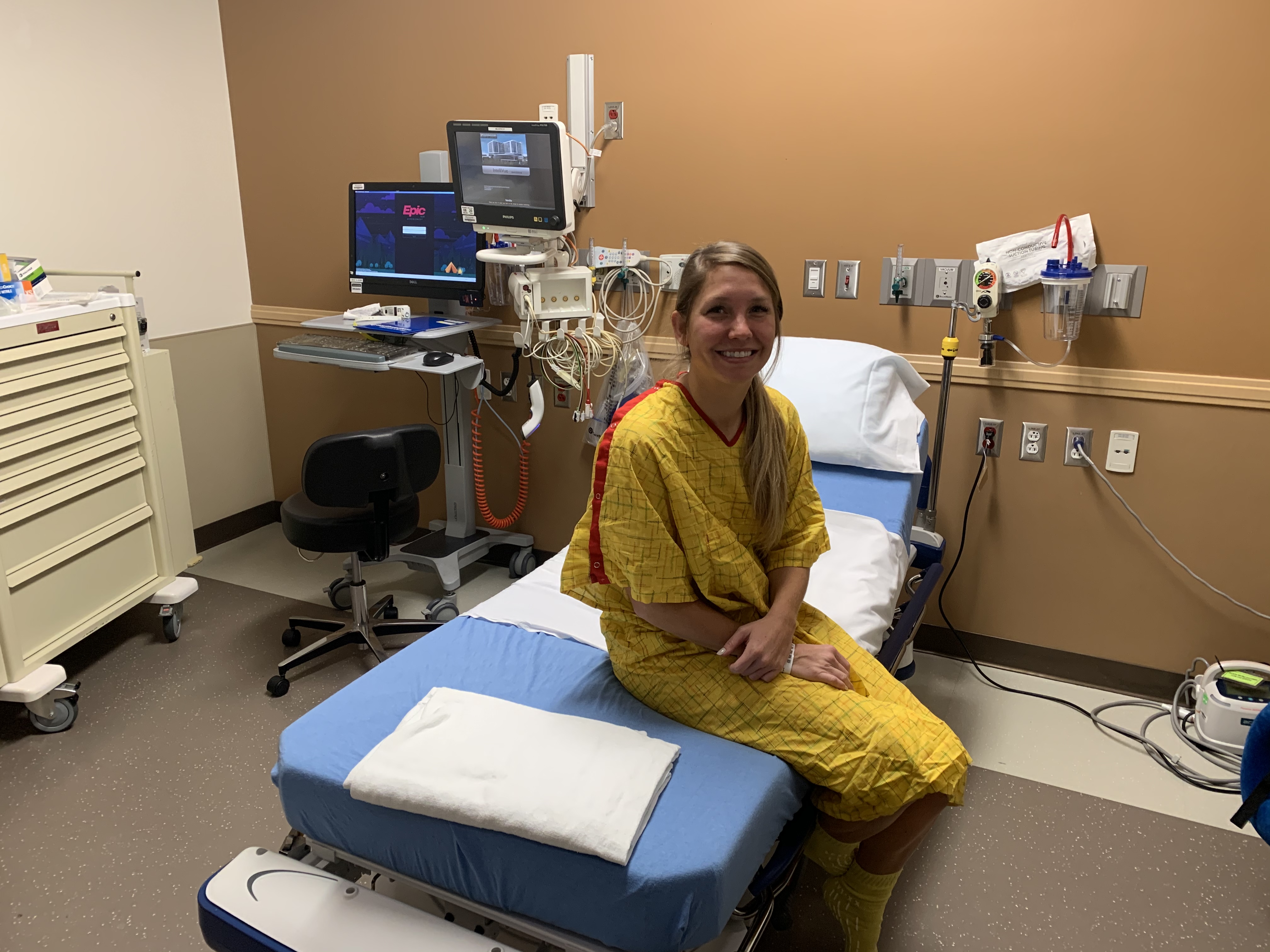
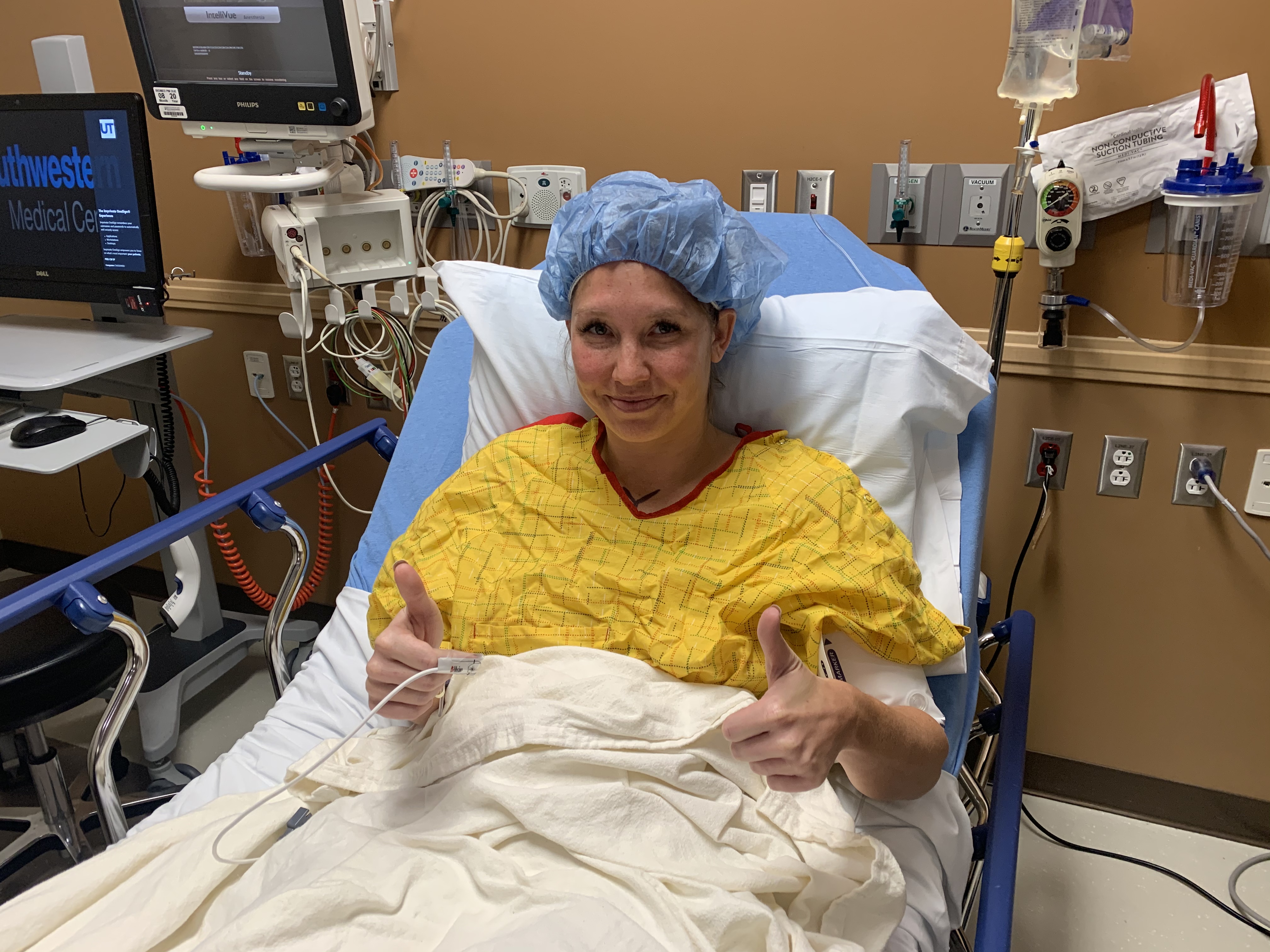
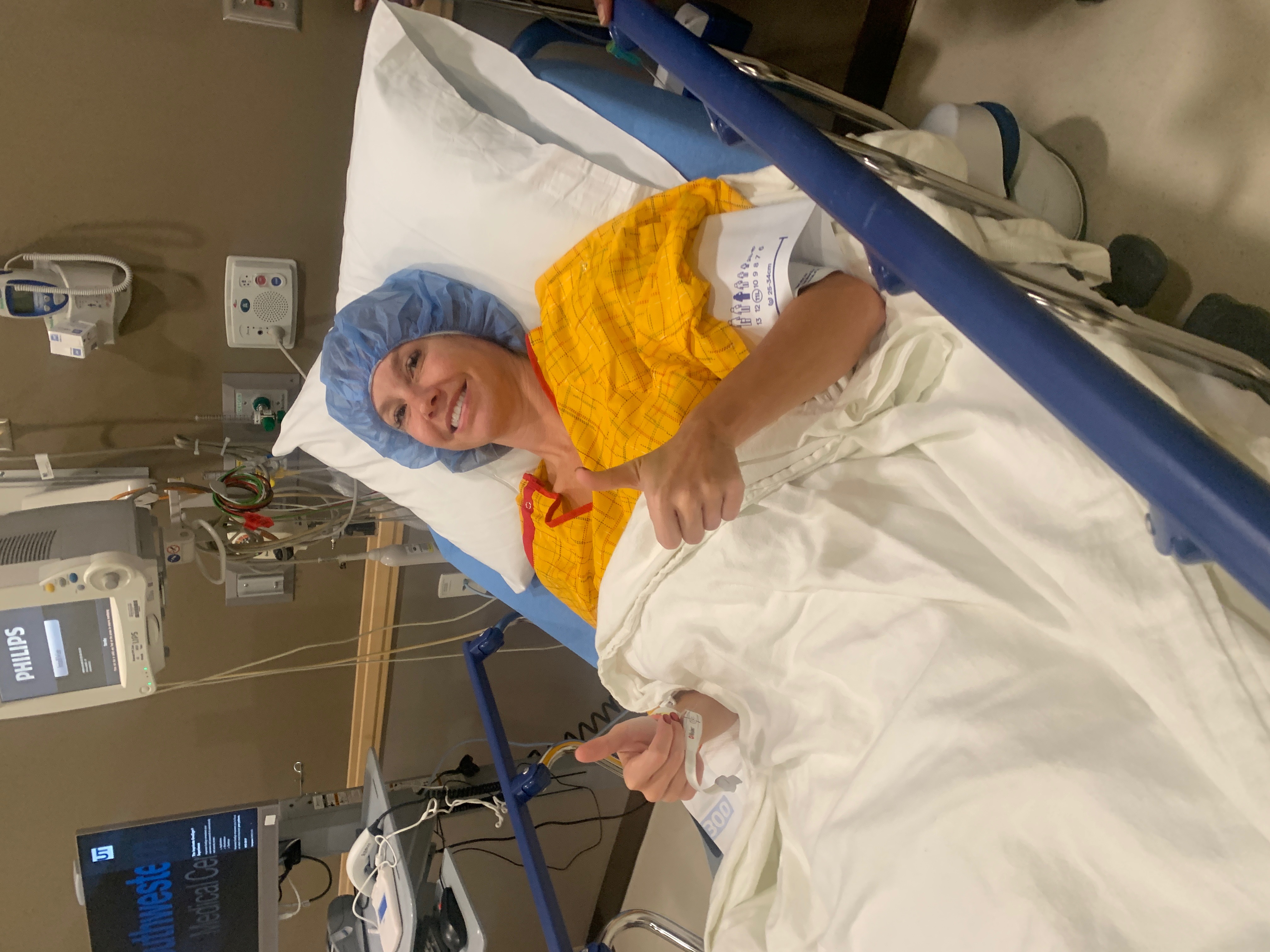
My surgery was scheduled for 7:00 am; we had to arrive at the hospital 2 hours early for check-in. My husband, Michael, and my mom were there to help get me admitted and offer moral support. My dad was at home watching our two daughters. The hospital staff was minimal. Typically, surgeries are not scheduled on a Saturday; they had purposely scheduled mine for a Saturday to minimize the number of people around, being that this would be the first robotic procedure.

The nurse who checked me in was named Carol and she was exactly what I needed that morning — bubbly, light, happy and made me feel comfortable. I anxiously watched the clock. I got my IV and made a joke about how scared I am of IVs, but alas, the lady screws up my IV and it doesn't go correctly in my hand, so she has to do it a second time in my forearm… see, I do have a reason to be scared of those!

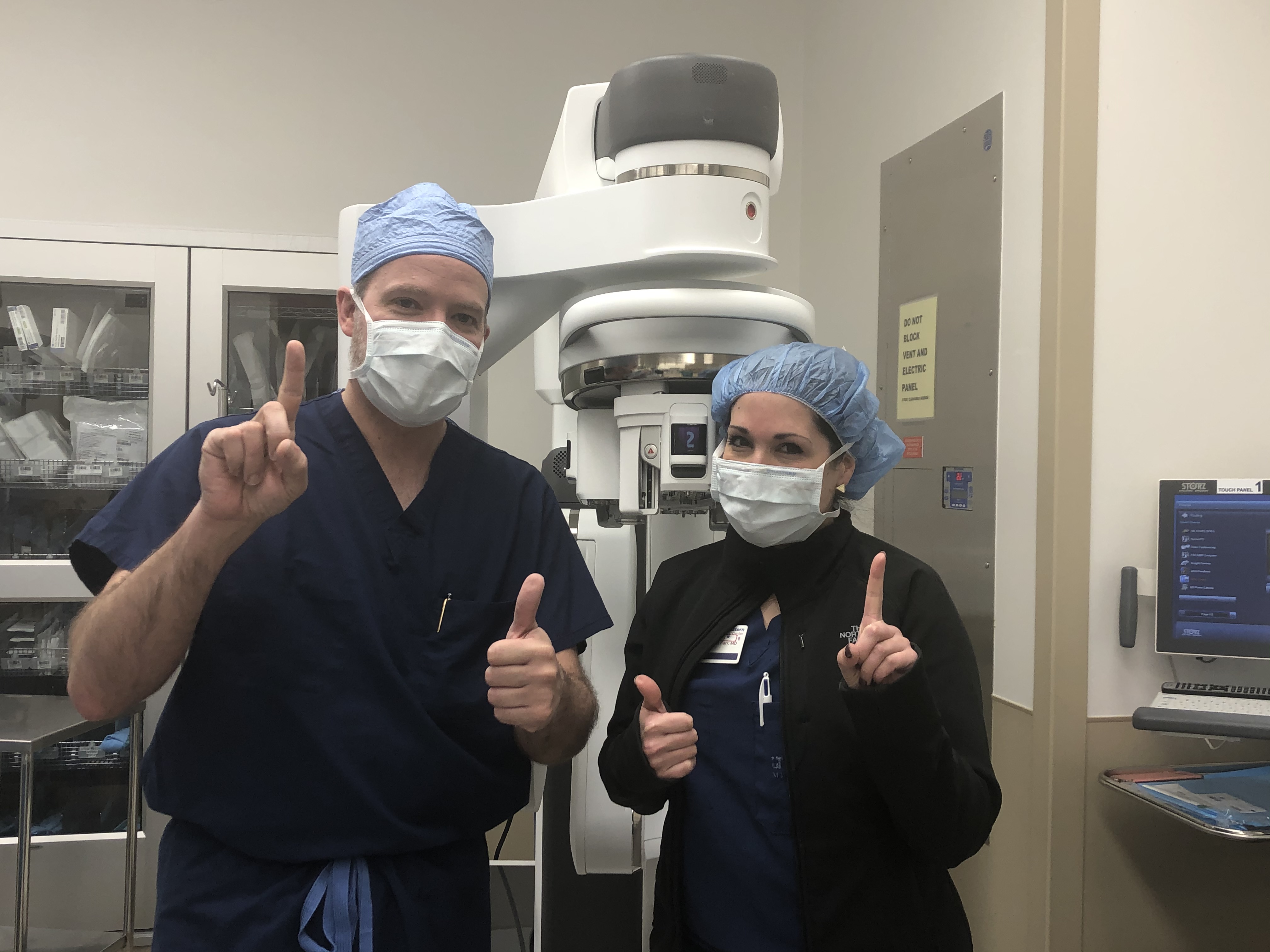
Dr. Farr finally came in to greet me. I'll never forget she had goggle marks on her face. I'll find out later that she got minimal sleep and was already up practicing for hours, hence the goggle marks. She reviews the procedure again and gives me more paperwork to sign specifically regarding the clinical trial. But then she uttered something I had not heard yet: "You will actually be the first patient in the world to have this procedure"… excuse me, come again?!

So, the 'world' comment obviously threw me, scared me, and it made me cry a little. I was aware I was their first patient, but not the first one in the world. A few chin quivers later: "excuse me, I'm just a little nervous"… OK, not computing right now, let's just do this.

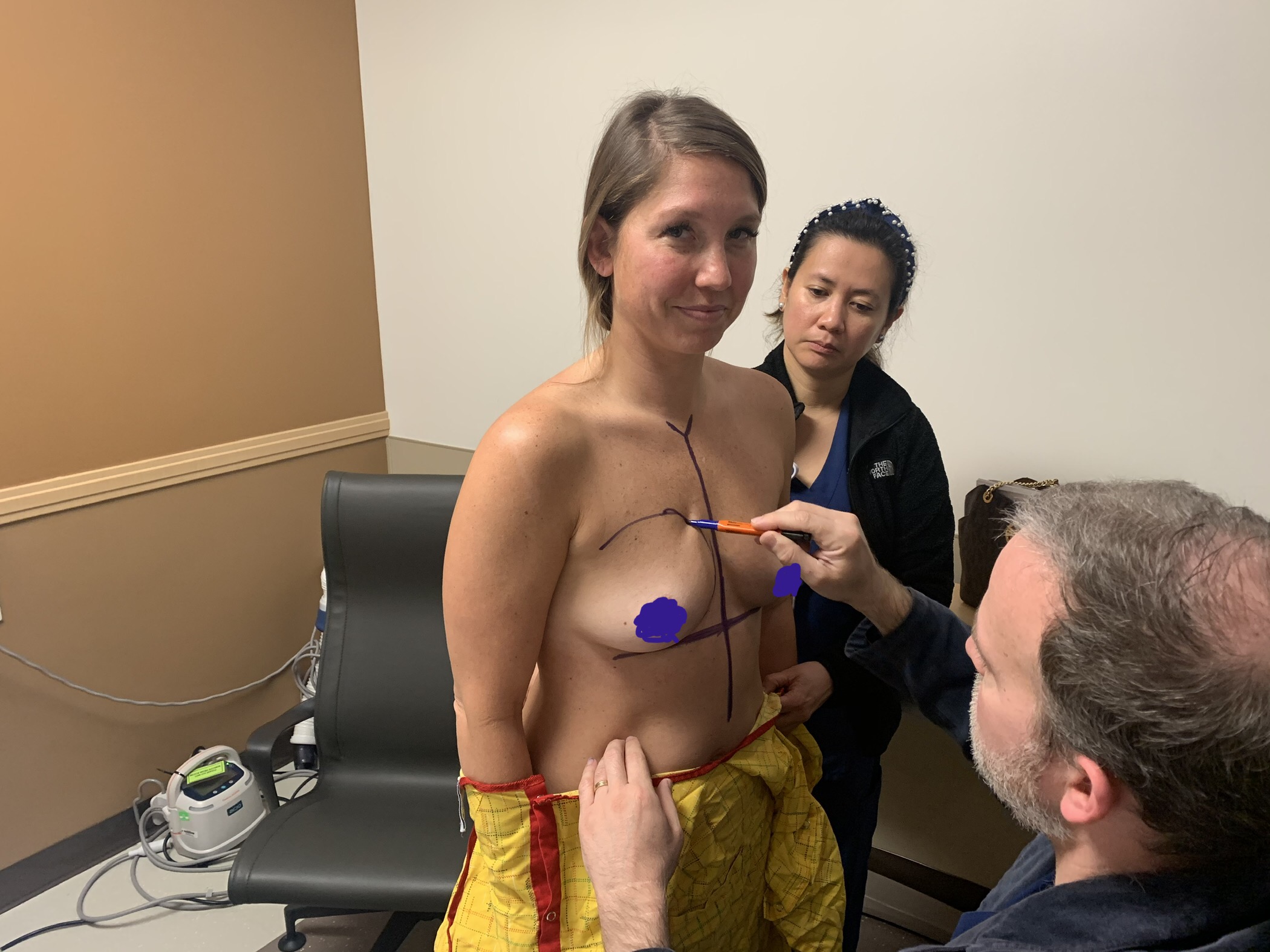
Dr. Haddock, my plastic surgeon, then had his turn. He also had me sign a consent form. Then it was time to mark me up! He had me stand up and drew with dark markers around my breasts to create a map for both him and Dr. Farr. After this, the anesthesiologist team came in and gave me anti-anxiety medicine — it was needed! I looked up and it was just about 7:00 am on the dot when they rolled me back.

I only briefly remember the actual operating room. The nurse told me she would take good care of me and they told me I had pretty eyelashes (aww, thanks!) and that was it! I would be asleep for the next 6 hours.
img

Surgery Morning Photos

img

In the Operating Room

2

In the Hospital — The First Night

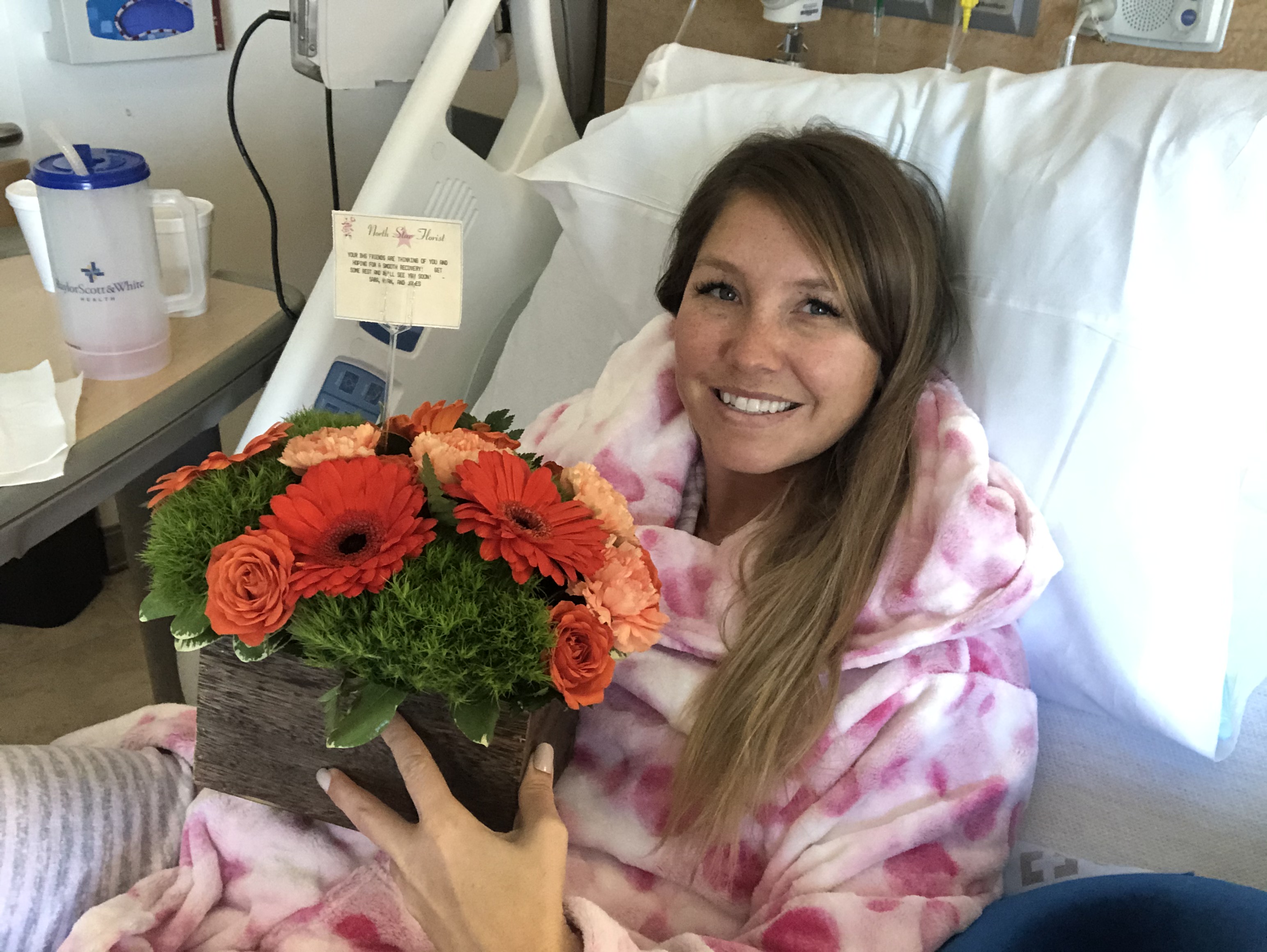
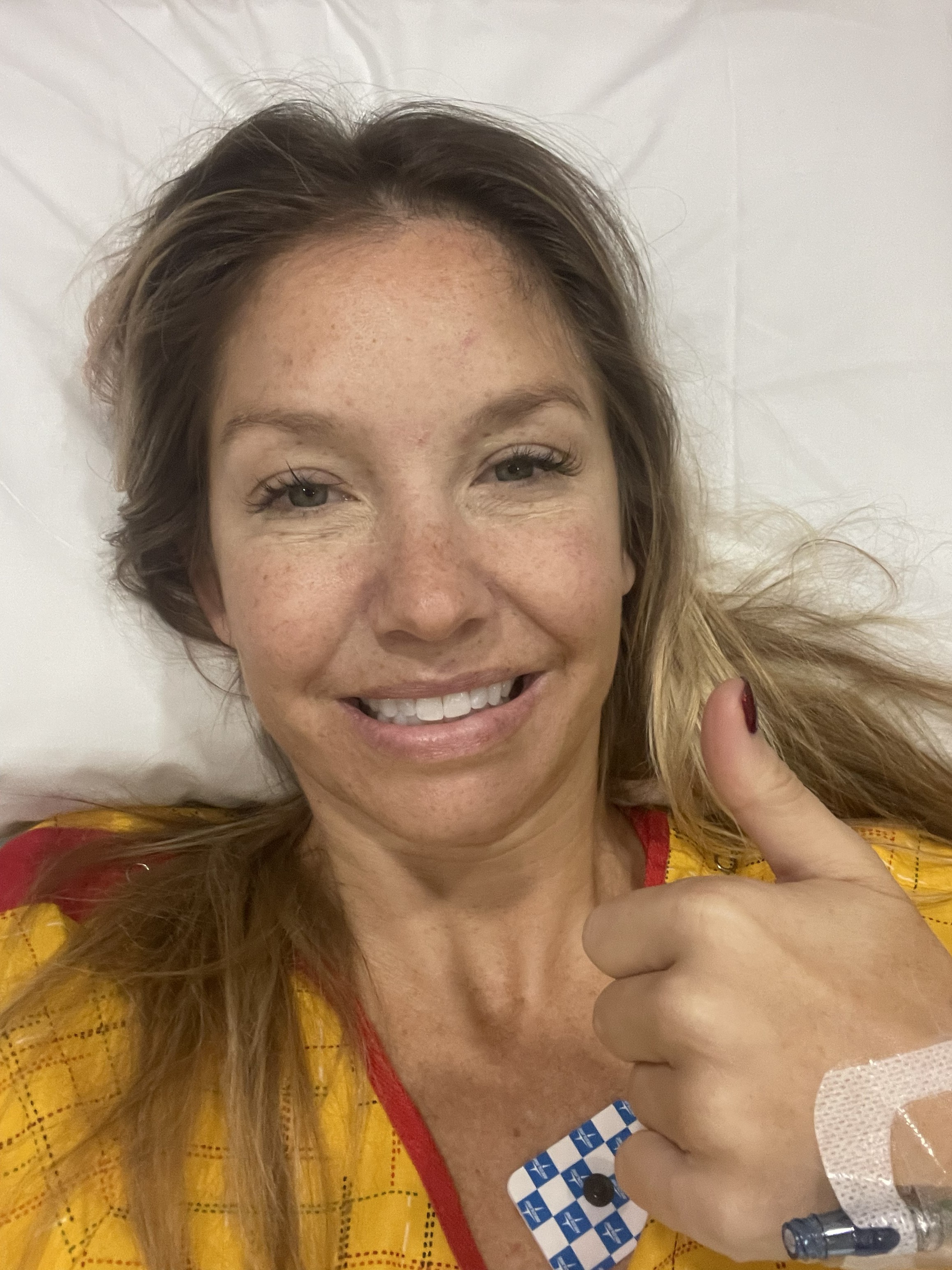
Yay, I did it! The first thing you always do is check the time. It was about 2:00 pm when I awoke, so I was relieved because that timing made sense (about 7 hours after I was rolled back). Unfortunately, I was in quite a bit of pain and could feel it in my chest. After everything was finally settled, my family was allowed to join me. Michael, my mom and dad came into the recovery room. I was very happy and relieved to see them!

I was moved to my more permanent hospital room around 4:00 pm. I finally wanted to take a peek at 'the girls' to see what I was working with! To my surprise, they looked nearly normal! Like my regular old boobs without much change at all! I was shocked! I finally felt a surge of ease. Everything was going to be OK.

I was surprised at how strong my appetite was — I ate everything they brought me. It felt like a small victory.

By nearly 9:00 p.m., though, I still hadn't gotten out of bed. The nurses told me I needed to try to use the bathroom. I could not pee to save my life. Apparently, this is common after anesthesia and narcotics, but in that moment, it felt defeating. And that's when I finally hit a breaking point.

I had been strong and positive for so long. Sitting there, exhausted and uncomfortable, I realized recovery might not be as straightforward as I'd imagined. And I do not like not being in control — of situations, of myself, of my own body. So there I sat. Crying a little, too. Michael could sense the shift immediately. He stayed calm and steady, offering both physical and emotional support for as long as it took. I needed that breakdown. And I needed to know he was there and that everything was going to be okay.

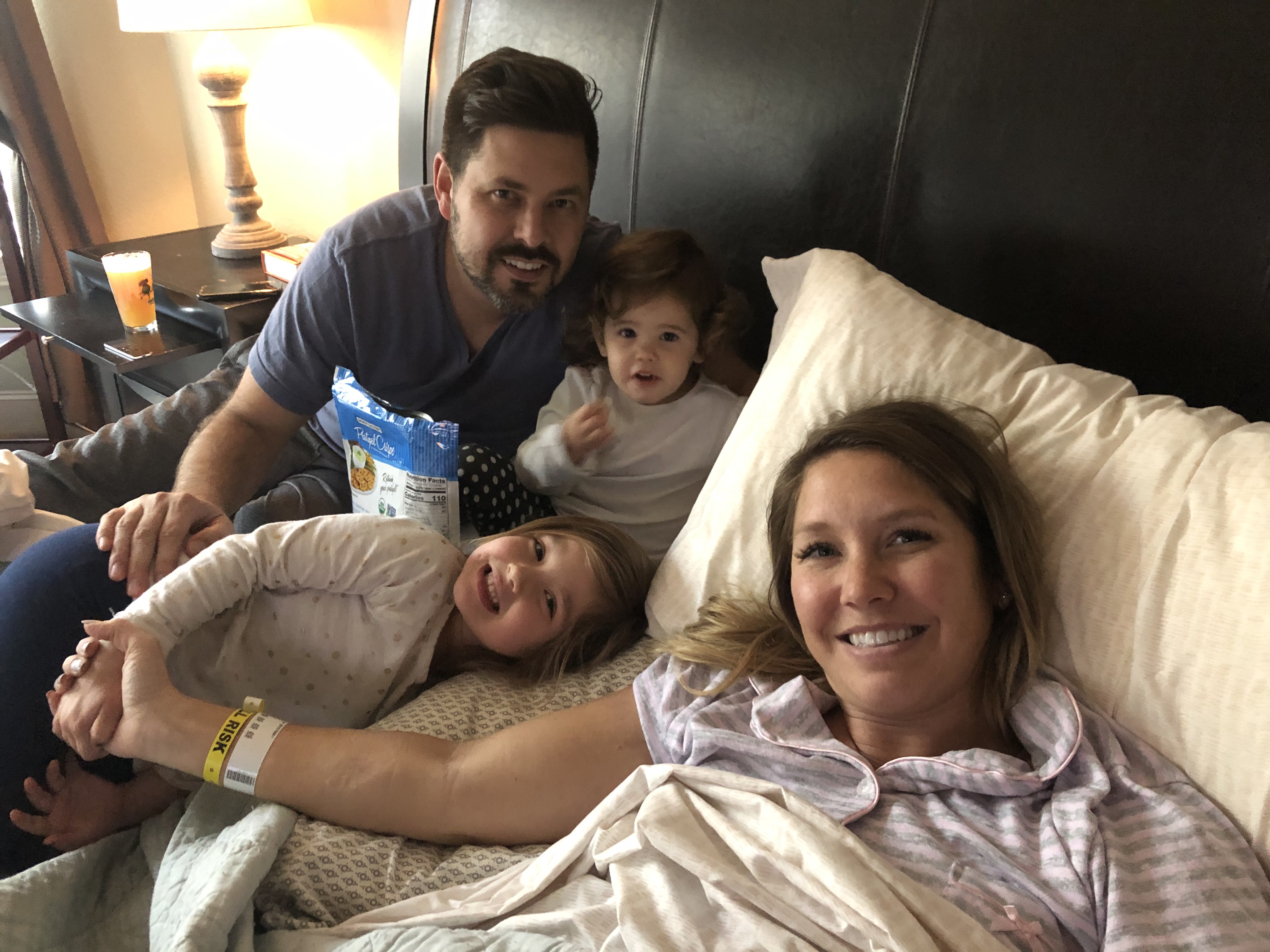
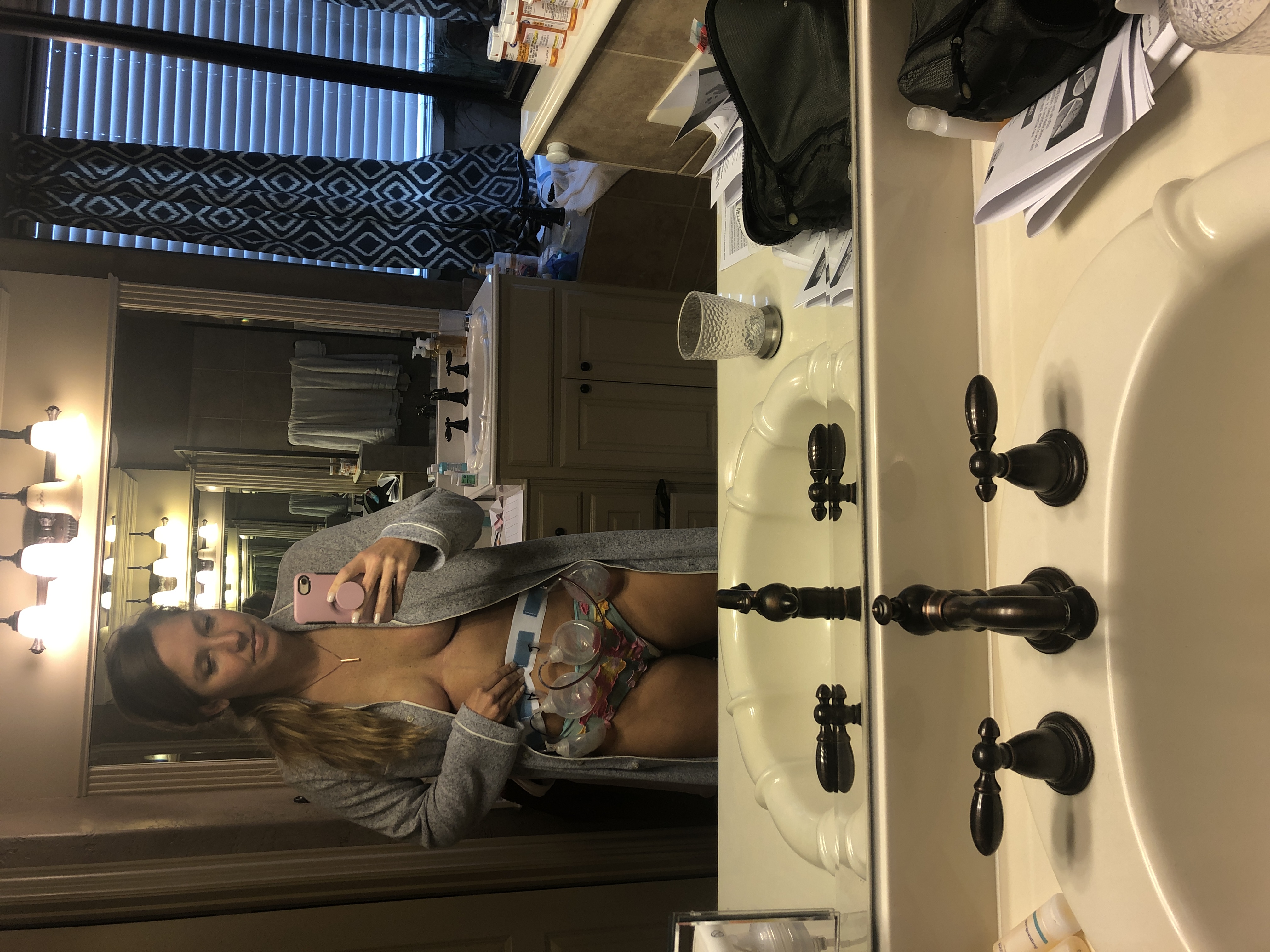
I was released the next day around 11:00 am. I was so excited to hug my two little girls Cora and Monroe and tell them mommy did it! I left the hospital with 4 drains, a prescription for Hydrocodone-Acetaminophen, muscle relaxers and antibiotics.

img

Hospital Recovery Photos

3

Week 1 — First Days Home

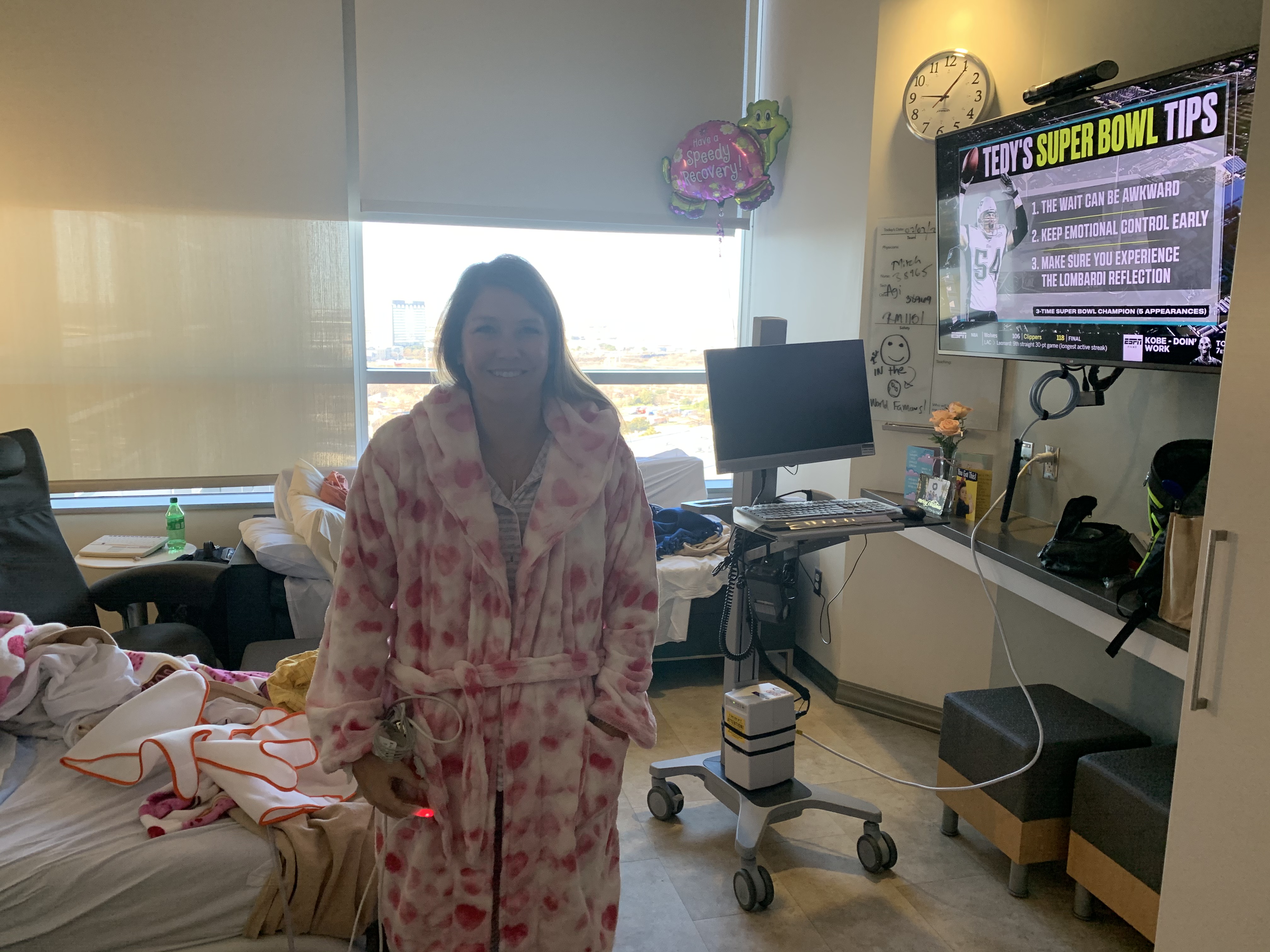
I had quite a bit of energy that first day home. I was surprised how well I could get around. I was able to go upstairs; I was excited to watch the Super Bowl (came home Super Bowl Sunday!) but I didn't have much of an appetite for all of the snacks. Things were looking up!

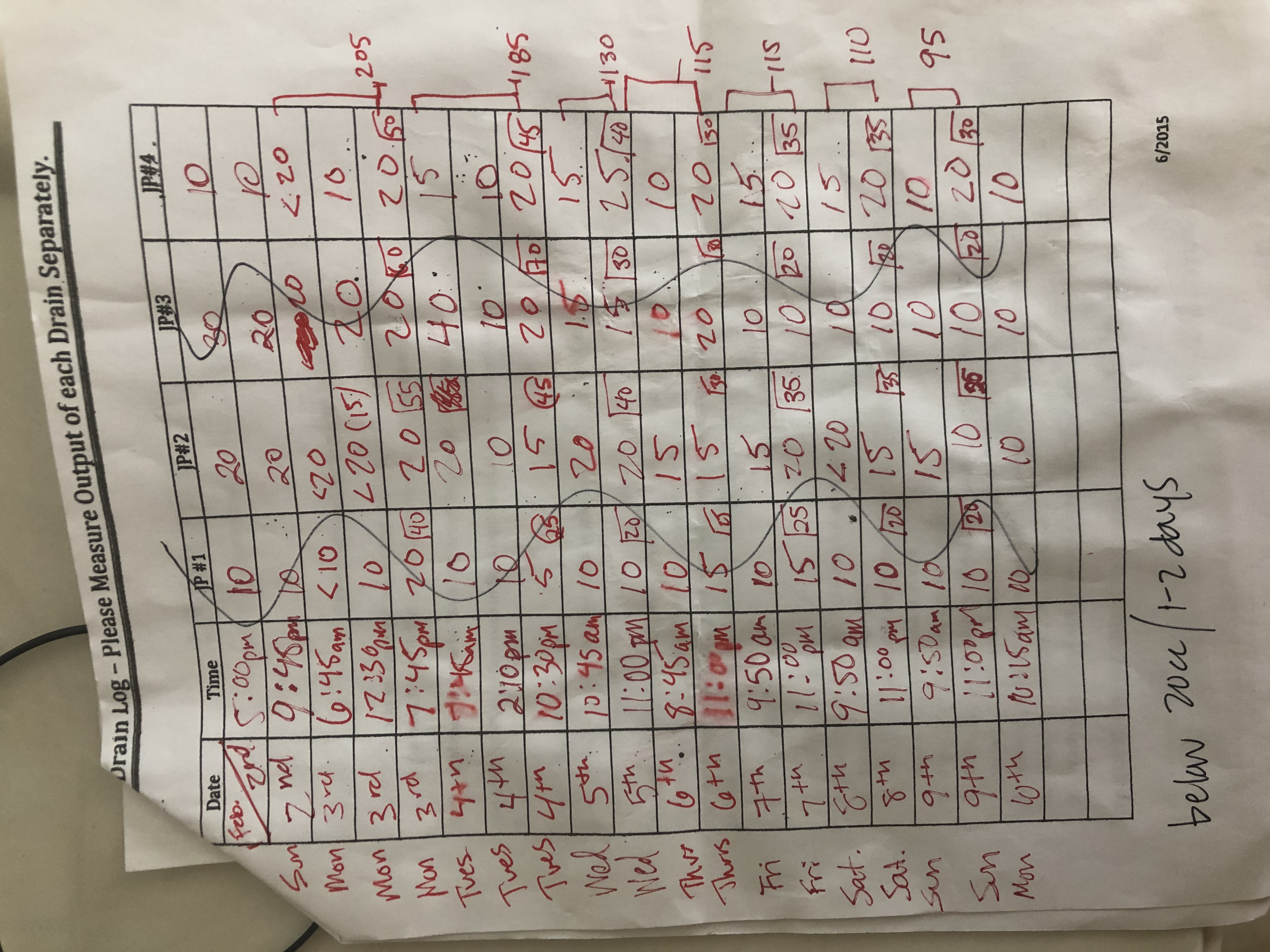
Michael continued to be a fantastic nurse and supporter. We determined we could empty my drains every morning and every night and it ended up being about the same time every day, which was also good for consistency.

On Monday, my second day after surgery, was the roughest day. The biggest factor wasn't necessarily the pain, but the side effects of taking the pain medicine. I was very mentally cloudy, nauseous, confused, and TIRED. I ended up getting ginger chews to help with the nausea. It was then that I realized I'm going to see what it's like WITHOUT the pain medicine going forward.

This was also the first day I took a shower, which did feel very nice (hot water heater fixed, by the way). Michael did have to help me as I couldn't move my arms too much. I was shocked I could take one so early — I was anticipating a much longer time. I was told I could take a shower 48 hrs after surgery.

By day 4/5 I just took ibuprofen. Things seemed so much better after this. I wasn't as groggy or nauseous. Honestly, the pain was quite fine. Another bummer thing that happened: I found out a few days in that I was allergic to the antibiotic medicine that was prescribed. Michael noticed bumps and something just didn't seem right. I did some research and found it was quite common to have this side effect, so my doctor switched me to a different antibiotic. Great, dealing with all the regular discomfort and now an itchy rash on top of it!

Day 6 was my first official day out of the house. Michael and I went to Torchy's Tacos (one of our favs) and enjoyed some tacos, queso and a margarita (hey I wasn't on pain meds anymore). It was lovely.

img

Week 1 — Home Recovery

4

Week 2 — 10 Days Post-Op & First Follow-Ups

I was looking forward to this day as I had follow-up appointments scheduled with the plastic surgeon's nurse, Tina (hoping to get drains out) and with Dr. Farr, the breast oncologist/surgeon. By this point, I had decent mobility in my arms and could pretty much reach my arms all the way up. I was not regularly taking ibuprofen throughout the day anymore.

Plastic Surgeon Appointment

I was able to take 2 of the 4 drains out on this day. Good news, but not exactly what I was hoping for. Having the drains pulled out was not painful, but an odd feeling. And just like with everything else, the anticipation is worse than the actual act. They tell you to take a deep breath and then, boom, pulls them out. They finally took the main incision's white bandage tape off (so I could finally see it!) — it was stitched up with clear stitches as well as glue, and looked really quite well!

Dr. Farr Appointment / Breast Surgeon/Oncologist

This was a great appointment. As soon as she walked in the room she said, "Oh my gosh, I have been so excited to see you ALL day." She said it really did go great but that she's glad this first one's behind her! She told me she was really quite nervous and was unable to sleep the night before. The goal of the clinical trial is to have approximately 70 total patients which she estimated would take about 3–5 years. Once that's completed, the trial will be reviewed by FDA for wider-spread use. She took a look at my breasts and seemed very happy with the results (as was I). I had overall good movement and minimal bruising.

Dr. Haddock Appointment (13 Days)

He confirmed the surgery went smoothly and was roughly 5 hours. They thought it would take longer and also anticipated more hiccups and there really weren't any! The final step of this appointment was to do my first tissue expansion. At surgery, I was filled to 300 cc's. I told him I wanted to be a small C, which would put me in the range of 420 cc's. They typically add 60 cc's to each breast with each expansion, meaning I would need a total of 2 expansions.
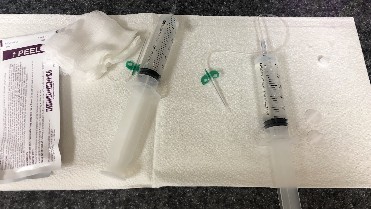
I assumed with these expanders there was going to be some big crazy or ugly port somewhere. But there is not! The 'port' is located under the skin and they use a magnet to find it and bring it to the surface. They simply use a big needle to inject the 60 cc's of saline right into each breast/tissue expander. The one benefit of no feeling in your chest is that you don't feel the huge looking needle and liquid that's about to go into your body! One expansion down, one to go!

img

Week 2 — Home Recovery

5

Week 3 — Returning to Normal Activities

We had a changing of the guard at two weeks out. My parents headed back home (to Kentucky). I was sad to see them go; I was getting pretty spoiled with all the help! By this point, I really felt fairly independent. My in-laws arrived soon after to continue to support us through the end of the month.

Day 16

I had my second nurse appointment with Dr. Haddock's office. At this point, I knew my numbers were solid for the last 2 drains to be removed (less than 20 ml total over 24 hours per drain)! I was now up to 360 cc's and this last expansion would put me at 420 cc's — the small C. Yay, drains out and expansion in! It was definitely tight this time!

I was quite active within this week and resumed some smaller chores, started taking the kids to school with help (still no lifting). At 3 weeks out, I went to the gym for the first time and did the elliptical and stair climber. Both felt fine and it was nice to get some cardio going again!

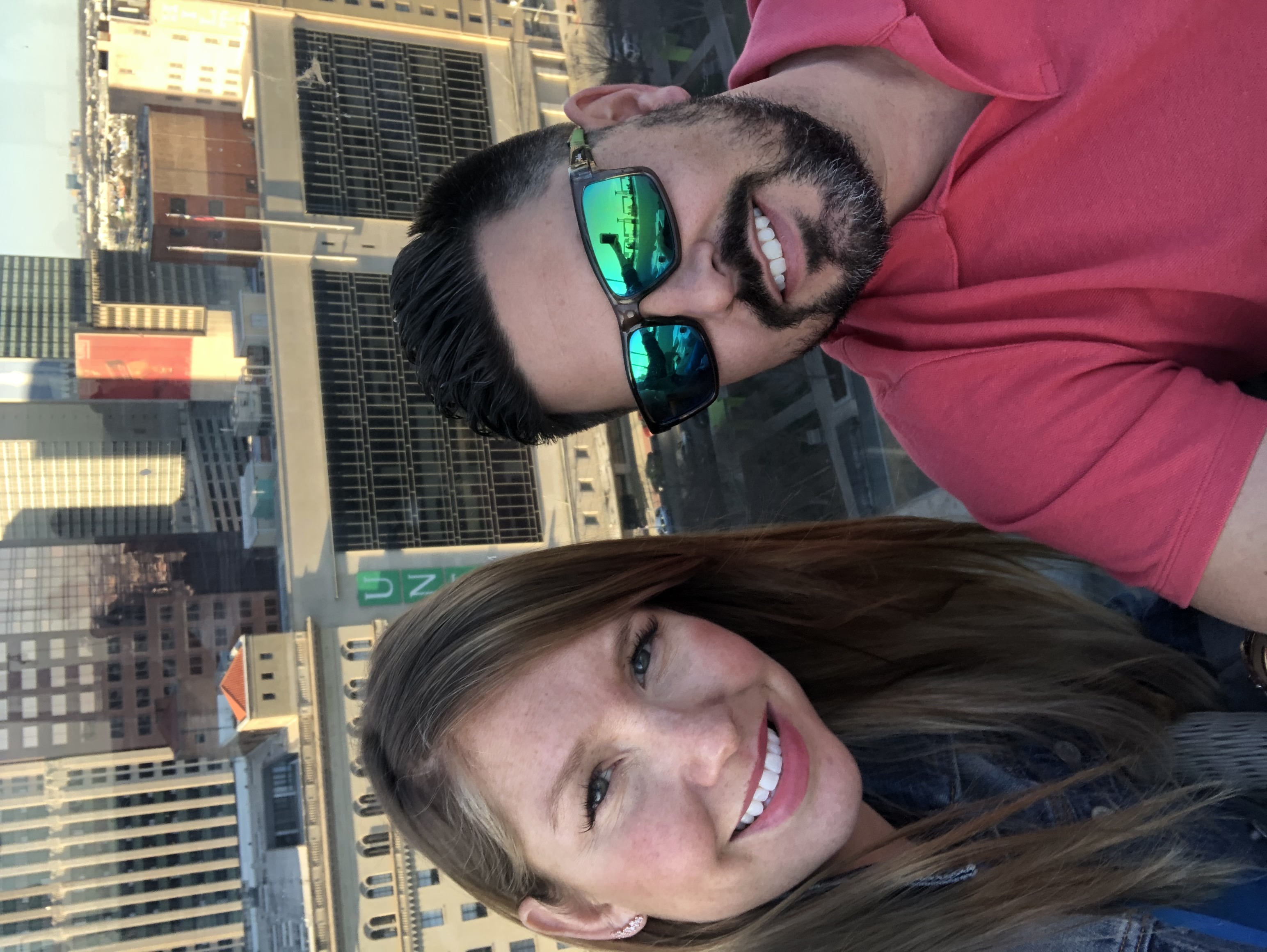
2020 was a special year for Michael, too (again this is pre-COVID)! It's a Leap Year and his birthday is February 29th! So, we got to celebrate his actual birthday this year. We received a very special treat from his parents — a night at the fancy Statler hotel in Dallas. It was a much needed retreat for both of us. We enjoyed the rooftop patio, a nice dinner and dancing!

img

Week 3 — Recovery Milestones

6

Weeks 4–6 — Full Recovery

Things moved along quite well. I was done with my expansions, I had my second surgery scheduled for the implant exchange, I was able to lift my children again and exercise. All was well and life pretty much resumed to normal (well except for COVID-19). I'm so grateful all of this happened prior to that!

Overall, the tissue expanders are quite an odd feeling. I told the doctor it sometimes feels like I'm not in my own body. They are very hard to the touch and just feel tight. When you push on them, I can feel the pressure from the inside but do not have sensation on my skin. It feels odd to hug people and sadly to hold my children.

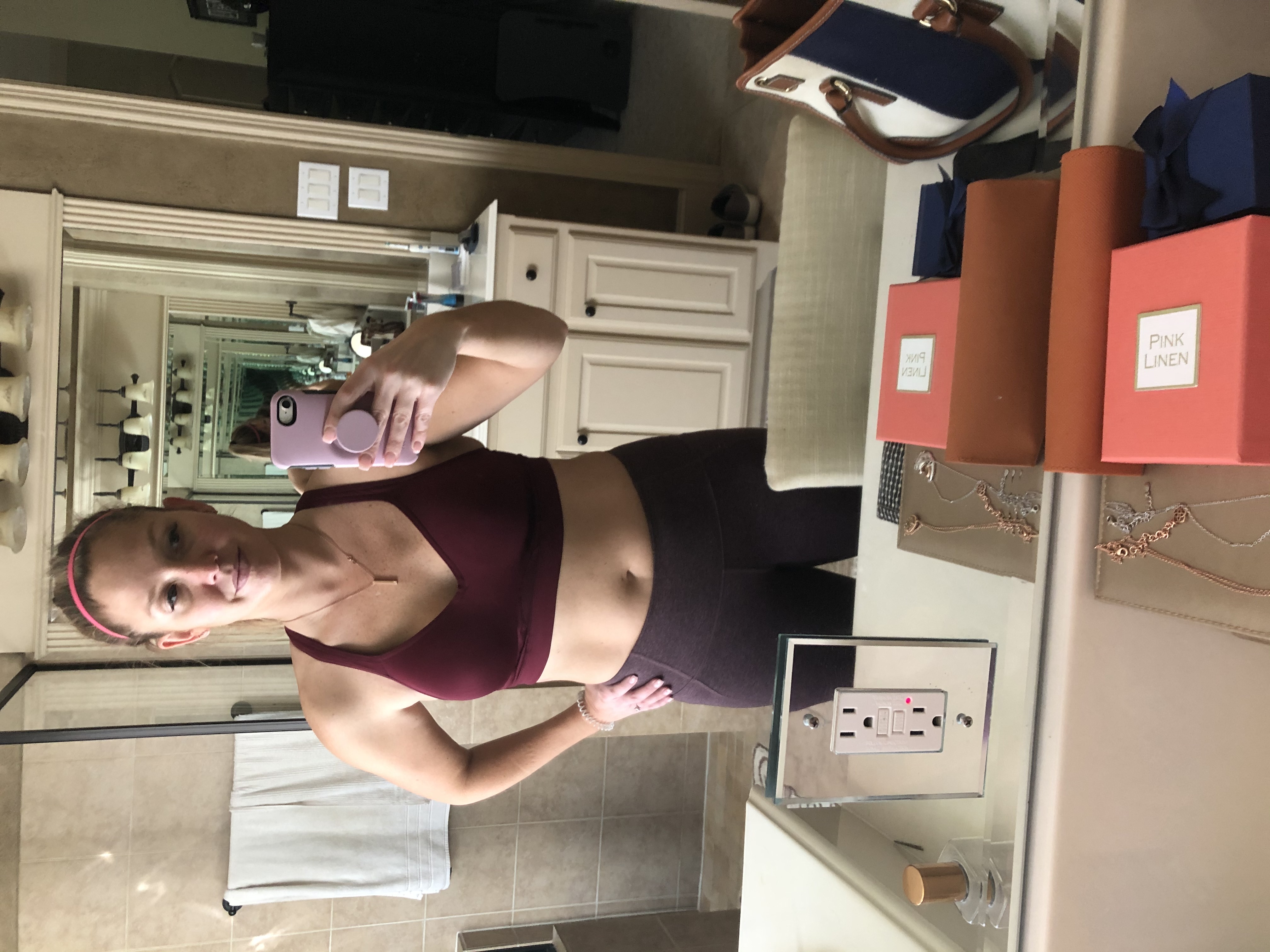
I am very pleased with my breast size and look. The incision has healed nicely by this point. I'm happy it's behind me. The recovery was honestly easier than I expected both physically and emotionally. The loss of sensation is very odd. But that sacrifice was absolutely worth it… for me. I'm so glad that I don't have to worry anymore, I'm so grateful I was given the opportunity to have this advanced surgical technique. I think my breasts look fantastic and I know they will only improve from here.

Follow-Up Surgeries (2020)

Three more procedures to complete the first chapter

Surgery 2: Implant Exchange & Fat Grafting — May 2020

COVID-19 certainly shook things up. I was originally scheduled to have my exchange surgery three months after the initial procedure, on June 1. Of course, when COVID hit, that trip was cancelled — along with just about everything else. In an unexpected silver lining, I was able to move my surgery up to mid-May.

This second surgery involved two main components:

  • Exchange of expanders for implants — The tissue expanders were removed and replaced with approximately 450 cc silicone implants (a size C).
  • Fat grafting — Liposuction was performed on my abdomen, and that fat was then used to supplement tissue over the implants. The fat grafting helps create a softer, more natural contour.

Even though this procedure was much shorter — about two hours — the recovery restrictions were similar. I was again advised not to lift anything for four weeks. With two young girls at home, that meant asking my parents to come back and help once again.

This surgery was outpatient and felt like such a stark contrast to the first one. After everything I had already been through, walking in for a two-hour procedure almost felt like going in for a routine appointment. The biggest positive? I wasn't nervous at all.

Surgery 3: Fallopian Tube Removal & Fat Grafting — October 2020

Well, now I feel like an old pro at this. My 3rd and final surgery related to the mastectomy was in October. This surgery involved 2 elements:

  • Fat grafting — liposuction of my thighs and using this fat to supplement tissue on top of the implant. After the first round there were a couple of areas of hollowing and ripples.
  • Fallopian tube removal — my previous two bikini-area incisions from abdominal liposuction in May were used in addition to my belly button. Fallopian tubes were also sent to pathology to ensure no signs of cancer.

This would be conducted by two different surgeons — my plastic surgeon, Dr. Haddock, as well as my obstetrician surgeon, Dr. Carlson. The decision to remove my Fallopian tubes was another step towards minimizing risks where possible. This was yet another outpatient surgery and took roughly 2 hours.
Mastectomy Surgeries Reflection: I am truly happy with the results. Of course, there are small things I could critique here and there, but in all honesty, I think my body looks better than it did before. That still surprises me.

I am forever grateful to my surgeons for the care, precision, and compassion they showed throughout this journey. There were sacrifices, absolutely. Recovery required patience, vulnerability, and support. But when I weigh those against what I gained — freedom from the constant worry about my risk of breast cancer — the tradeoff feels priceless.

Chapter 3

Preventative Hysterectomy — 2024

My RRBSO & Hysterectomy Experience — the next chapter in proactive, preventative care.

1

Planning RRBSO — Working Through the Decision

Because of my BRCA2 status (and my family history), I've already made big preventative choices. This next one is different — not because it matters more, but because it's less visible. Ovarian and tubal cancer don't come with the same early warning signs, and that reality has been sitting in the background of my life for a long time.

Quick definitions (because the wording gets confusing fast)

  • Salpingectomy = removing the fallopian tubes (already done in 2020)
  • Bilateral salpingo-oophorectomy (BSO) = removing both ovaries and fallopian tubes
  • RRBSO = same surgery, done specifically for risk reduction
  • Hysterectomy = removing the uterus (sometimes the cervix too)

Because my fallopian tubes had already been removed in 2020, my surgery involved removing both ovaries along with my uterus and cervix — a risk-reducing bilateral oophorectomy with total hysterectomy.

2

Surgical Menopause — The Decision Nobody Can "Logic" Away

A premenopausal oophorectomy isn't just a surgery — it's an abrupt hormonal change. The research I read consistently pointed to the same theme: estrogen matters — not only for hot flashes or sleep, but for long-term health too, especially when ovaries are removed before natural menopause.

What I kept coming back to was this: I don't want to trade cancer risk reduction for a totally avoidable quality-of-life crash. For me, the question wasn't whether I'd use hormone therapy. It was how to do it safely and thoughtfully, in a way that fit my specific history.

3

Surgery Day — November 8, 2024

On November 8, 2024, I underwent a risk-reducing bilateral oophorectomy and total hysterectomy. Going into surgery, my biggest fear wasn't pain or recovery — it was hormones. I had read the research, spoken with multiple specialists, and created a plan. Still, there's a difference between understanding something intellectually and experiencing it physically.

One important discussion beforehand centered on hormone replacement. My surgeon initially advised waiting about six weeks before starting estrogen, primarily due to concerns about post-surgical blood clot risk. But after doing my own research and consulting several hormone specialists, I couldn't find clear evidence that delaying estrogen was necessary in my specific situation. I made the decision to have estrogen prescribed and ready immediately after surgery — in pill form.

I didn't start it the very first day. I waited about three to five days to let the anesthesia fully clear and to make sure I was up and moving well. Once I felt steady and mobile, I began hormone replacement. I haven't looked back since.

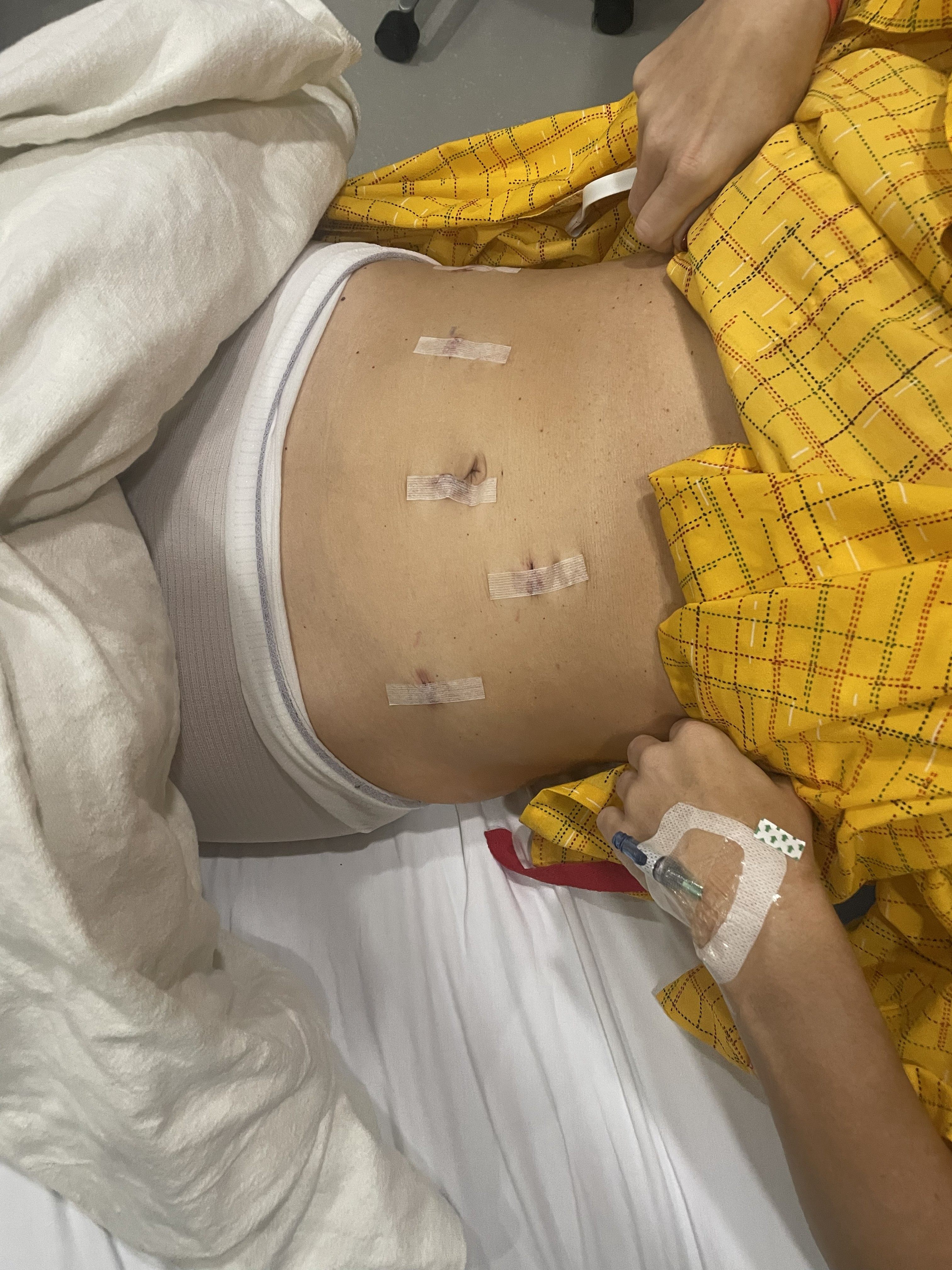
As for the surgery itself — it went smoothly. I went home the same day and was able to shower the next. For the first few days, I stayed on prescribed pain medication and alternated it with 800mg ibuprofen, especially at night so I could sleep. I was up and moving fairly quickly — slowly and carefully, but moving. I didn't drive for about a week and a half and avoided lifting or exercising for six to eight weeks.

Looking back now, more than a year later, I can say this honestly: once again, it wasn't nearly as bad as I feared.

img

Surgery Day Photos

img

Recovery Photos

4

Where I Am Now — 1+ Year Post-Op

More than a year post-op, things feel stable. I've had to make a few small adjustments to my estrogen levels along the way — mostly in response to subtle symptoms like headaches or arm aches. Nothing dramatic, just careful tuning. I learned quickly that listening to my body mattered more than sticking rigidly to a starting plan.

To make sure I was approaching hormone replacement thoughtfully, I also sought out a provider certified through the North American Menopause Society. I now meet with her annually to review labs, symptoms, and long-term strategy. Having that additional expertise in my corner has given me confidence and peace of mind.

I continue to coordinate my annual checkups alongside my breast exams. My energy, mood, and overall quality of life feel intact — and I remain cancer-free.

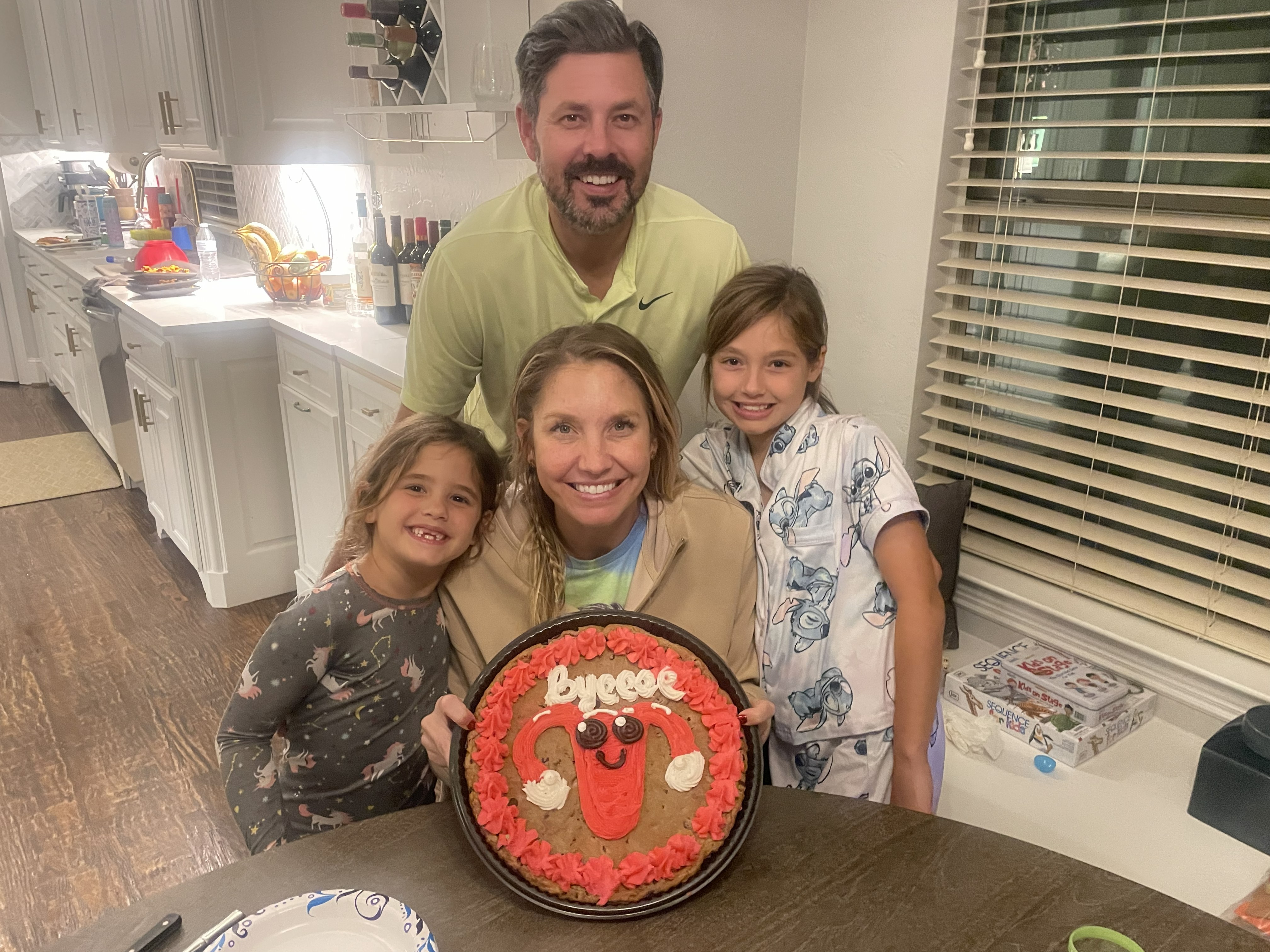
This surgery wasn't about fear. It was about reducing risk while protecting the life I want to live. Looking back, I'm grateful I took the time to research, ask hard questions, and move forward with a clear plan.

img
"If you're considering RRBSO or a hysterectomy, I hope this gives you something concrete — not just statistics, but reassurance that with preparation and support, this can be manageable and empowering."

Quick Facts: All Surgeries at a Glance

SURGERY 1: Robotic Mastectomy — February 1, 2020

  • Status: BRCA2+, no cancer  |  Age: 35  |  Breast size: B
  • Procedure: Prophylactic double mastectomy, nipple sparing with Single Port da Vinci Robot. Breast reconstruction with tissue expanders (filled to 300cc) and implants to follow approximately 2.5 months post-op.
  • Doctors: Dr. Farr (surgical oncologist); Dr. Haddock (plastic surgeon)
  • Hospital: UT Southwestern, Dallas, Texas
  • Duration: 5–6 hours  |  Stay: 1 night

SURGERY 2: Implant Exchange / Fat Grafting — May 14, 2020

  • Procedure: Exchange tissue expanders for silicone implants (approx. 450cc) + fat grafting (abdomen)
  • Doctor: Dr. Haddock (plastic surgeon)
  • Hospital: UT Southwestern, Dallas, Texas  |  Duration: 2 hours | Outpatient

SURGERY 3: Fallopian Tube Removal / Fat Grafting — October 2, 2020

  • Procedure: Removed fallopian tubes + second round fat grafting (thighs)
  • Doctors: Dr. Haddock (plastic surgeon); Dr. Matt Carlson (obstetrician gynocologist)
  • Hospital: UT Southwestern, Dallas, Texas  |  Duration: 2 hours | Outpatient

SURGERY 4: Risk-Reducing Bilateral Oophorectomy with Total Hysterectomy — November 8, 2024

  • Status: BRCA2+, no cancer  |  Age: 40
  • Procedure: Robotic laparoscopic hysterectomy — removal of both ovaries (fallopian tubes previously removed) + total hysterectomy (uterus + cervix)
  • Doctors: Dr. Jayanthi S. Lea (gynecologic oncologist); Jacqueline Covelli, NP
  • Hospital: UT Southwestern, Dallas, Texas  |  Duration: 3–5 hours | Outpatient

Connect With Me — FORCE Peer Navigator

I am proud to serve as a Peer Navigator with FORCE (Facing Our Risk of Cancer Empowered). If you're navigating a hereditary cancer diagnosis, considering genetic testing, or making decisions about preventative surgery, I'm here to support you.

Whether you're curious about robotic mastectomy, managing BRCA2 mutations, or just need someone who gets it — I'm available to share my experience and provide peer support through your journey.

To connect with me specifically: When you request a peer navigator, mention you'd like to be matched with me, Renee, based on BRCA2, robotic mastectomy, and/or preventative hysterectomy experience.

Tips & Resources

Practical Advice From My Experience

Essential Recovery Items

Hospital Stay Essentials

  • Face wipes and chapstick
  • Dry shampoo
  • Body and wedge pillow for support
  • Cozy blanket from home
  • Family pictures and cards
  • Water bottle with long straw

Recovery Tips

  • Nutrition: Increase protein and electrolytes
  • Showering: Can shower after 48 hours with waterproof tape
  • Drain tracking: Keep meticulous records daily
  • Movement: Walking encouraged, avoid lifting arms initially
  • Pain meds: Consider ibuprofen-only as soon as tolerable

How to Talk to Your Children

  • Because my girls were only four and two at the time, I kept the explanation simple but honest. I told them I was having surgery to stay healthy for our family.
  • To help introduce the topic, we read Mom's Genes together in the weeks leading up to surgery.
  • I also wrote each of them an email to read when they're older — explaining my decision and capturing how I felt at the time.
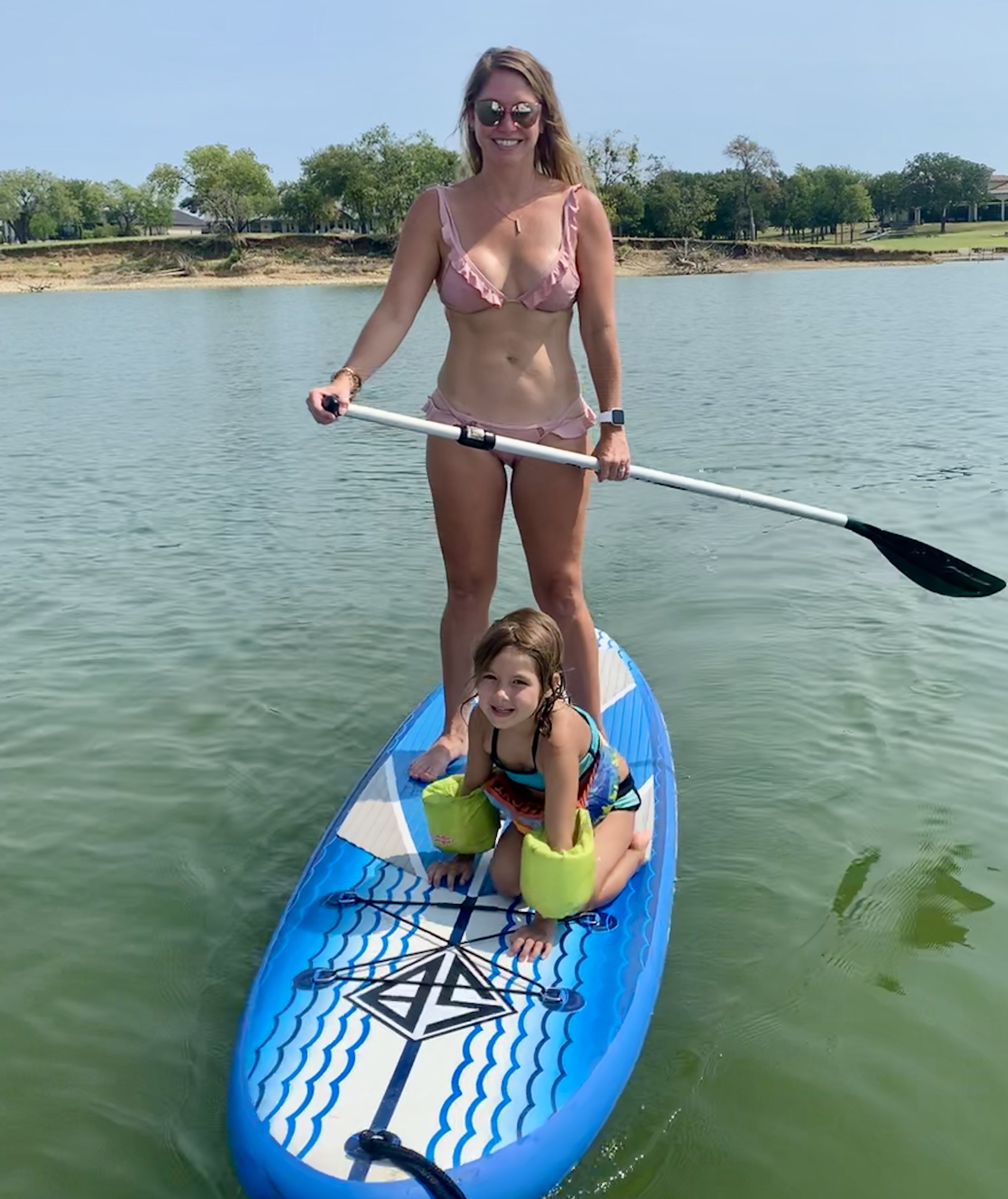
  • They adjusted beautifully. Now I'm fully recovered, and what once felt so big has become just a small blip in our story.

Drain Info — What to Expect

  • The drains come out from the sides of your torso and are stitched in. The bulb collects excess fluid and needs to be emptied and measured daily.
  • The hospital should provide a velcro belt worn around the waist. Make sure you get 2 belts so you can switch to a dry one after showering.
  • Everyone is different. I had 2 in for a week and 2 days and the other 2 in for 3 weeks and 2 days.

Helpful Resources